
Investing Frameworks10 min read
The Shortage Paradox: SK Hynix Says 2027 Will Be the "Worst Ever" — So Why Is Samsung Racing $1.35 Trillion to Build More?
In July 2026, SK Hynix CEO Kwak Noh-jung called 2027 the "worst ever" year for memory, with demand outstripping supply beyond 2030. Almost simultaneously, Samsung pulled its first Yongin fab forward to 2029, part of a ~2,030 trillion won (~$1.35 trillion) super-investment. Using Buffett's capacity cycle, Peter Lynch's cyclical-stock lens, and Damodaran's normalized earnings, we decode the "shortage paradox" — the most dangerous psychological trap at a cycle top.

One Week, Two Signals That Contradict Each Other
In July 2026, the memory industry handed investors a logic puzzle. On one side, SK Hynix CEO Kwak Noh-jung told Reuters bluntly: 2027 will be the "worst ever" year for memory supply, and driven by AI demand, the supply crunch could persist beyond 2030. On the other side, Samsung Electronics announced it was pulling its first Yongin fab forward by one to two years — to 2029 — as part of a total ~2,030 trillion won (~$1.35 trillion) AI-chip-and-memory investment plan.
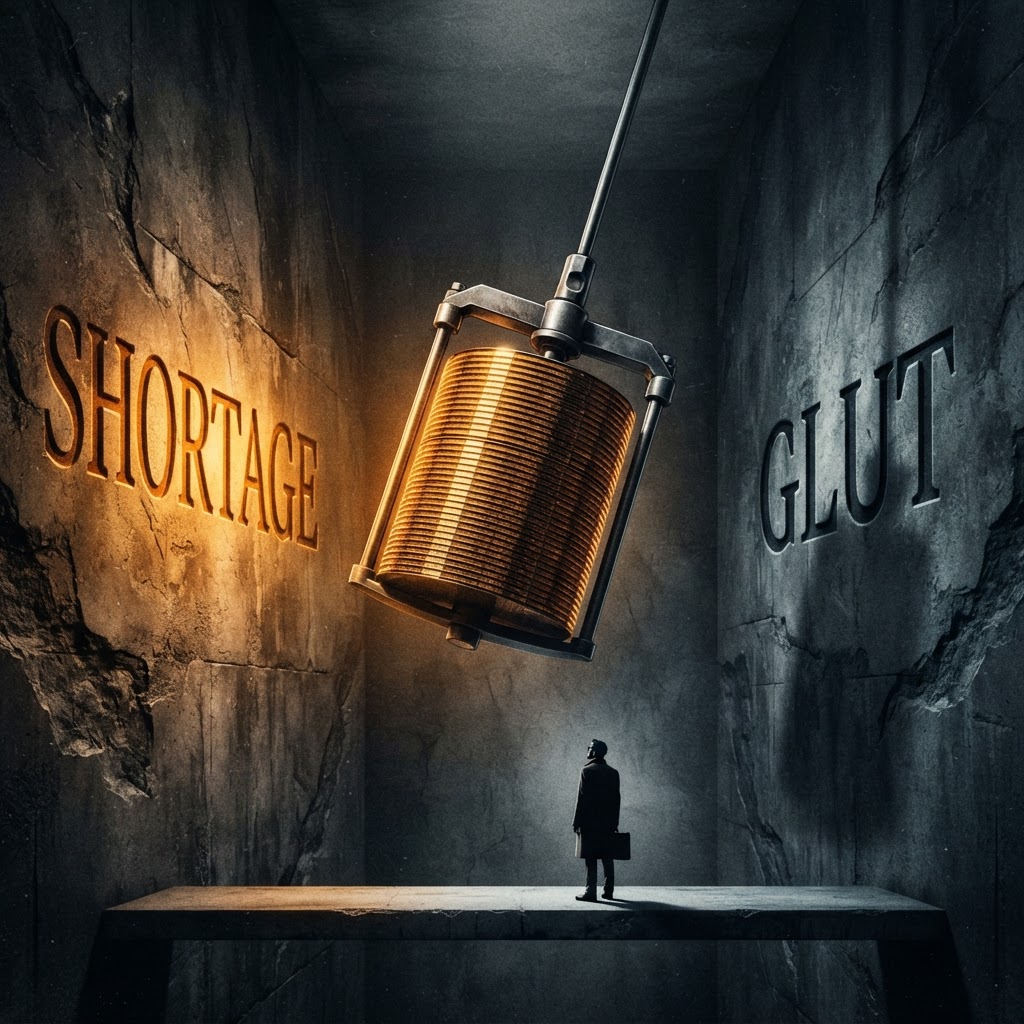
Put those two headlines side by side, and you catch a whiff of something off. If the world really will "run short until 2030," then expanding is rational. But if the entire industry has bought the narrative — if everyone is pulling factories forward and maxing out capex at the same moment — then the louder today's "shortage" is shouted, the more likely it becomes a glut-fueled hangover in 2028.
This is exactly when a value investor should be on high alert. The market's social sentiment can hear only one word right now: "shortage." But the real question isn't whether there's a shortage — it's whether that shortage is driven by genuine demand, or manufactured by a narrative everyone has collectively agreed to believe. This article won't tell you to buy or sell anything; it wants to hand you a thinking tool for spotting a cycle top.
The Iron Law of Semis: The Cure for High Prices Is High Prices
Memory is one of the most cyclical businesses on Earth — full stop. Its script has repeated almost word-for-word for decades: demand booms → prices spike → the whole industry cries "structural shortage, this time is different" → everyone expands like mad at once → capacity floods in two years later → oversupply → prices collapse → makers post huge losses and slash capex → supply shrinks → the next shortage begins.
The key is the lag. A leading fab takes 2–4 years from breaking ground to mass production. That means capacity decisions made today on the basis of a "2027 shortage" will land right around the point where demand growth is slowing. Samsung pulling a fab forward two years compresses that lag — and thereby speeds up the arrival of the future supply flood. There's an old line in the industry: "The cure for high prices is high prices." High prices lure everyone to expand; expansion eventually kills the high prices.
So when CEOs all chant "undersupplied until 2030" in unison, the smart investor hears not a guarantee but a warning: management optimism is becoming the whole industry's basis for capacity decisions — and collective optimism is the seed of oversupply.
Peter Lynch: First Figure Out — Are You Buying a Growth Stock or a Cyclical?
Peter Lynch sorted stocks into six categories, and he stressed one thing repeatedly: one of the most common ways investors lose money is buying a cyclical as if it were a growth stock. Memory is a textbook cyclical.
Lynch had a counterintuitive iron rule for cyclicals: a cyclical's P/E ratio tends to be lowest exactly when earnings are highest, the financials are prettiest, and the news is most optimistic — because the market already sees the earnings peak coming and rolling over. Conversely, a cyclical's highest, "most expensive"-looking P/E is often the earnings trough — the best time to buy. This is the exact opposite of a growth stock. When a memory maker posts record profits, the CEO shouts "worst shortage ever," and the P/E looks temptingly low — that is precisely when Lynch would be most wary, not most excited.
The lesson for the ordinary investor is plain: before you act, ask "is this a cyclical?" If it is, don't apply growth-stock logic (higher earnings = better, cheaper = buy more). Do the reverse — watch the industry's capacity cycle, not how dazzling this single quarter looks.
Buffett's Capacity Cycle + Damodaran's Normalized Earnings
Buffett is deeply wary of "everyone doing the same thing at once." He learned it the hard way in airlines: in a capital-intensive, commoditized industry, once every player adds capacity in good times, the outcome is often an entire industry destroying its own returns by its own hand. Memory's competitive structure is more concentrated than airlines (Samsung, SK Hynix, and Micron dominate), but the "everyone expanding at once" move still pushes the whole industry toward the next oversupply. Buffett would ask: what is this business's return on capital at the bottom of the cycle? — not just the windfall of one peak quarter.
Damodaran (Aswath Damodaran) supplies the concrete valuation discipline: for a highly cyclical stock, you must never multiply a single year's earnings — least of all a peak year's — by a multiple. The right approach is to compute normalized earnings across the whole cycle — average the good years and the bad years into a mid-cycle earning power, then value off of that. Multiplying peak earnings by an optimistic multiple is the classic double-error that wrecks cyclical investors.
Stack the two masters: Buffett shows you the fate of "collective expansion," and Damodaran helps you convert "peak profit" back into "mid-cycle profit." When the market can only linearly extrapolate today's windfall out to 2030, this discipline keeps you sober.
The Ordinary Investor's Three-Step "Cycle-Top Check"
Facing the "shortage paradox," an ordinary investor doesn't need to become a semiconductor expert — you just need to turn it into a check you can run yourself.
Step one: count the expansion. Don't just listen to the "shortage" slogan; count the capex and new capacity the whole industry has already announced — Samsung's $1.35 trillion, everyone's new-fab plans. If the entire industry is expanding at once, ask: when all that capacity floods in 2–3 years out, will demand keep up? Step two: run a reverse-DCF stress test — assume prices fall 30–40% two years out on oversupply, recompute profit and valuation, and see whether the building collapses. Step three: cross-check with normalized earnings — swap peak profit for a cross-cycle average and see how much of today's intrinsic value is left.
This is exactly the instinct Valuefocus is built to give you. When everyone is euphoric over "the worst shortage ever," our intrinsic value calculator lets you value off mid-cycle earnings rather than peak earnings. Then the master frameworks take over, guiding you through Lynch's cyclical-stock lens, Buffett's capacity cycle, and Damodaran's normalized earnings to answer the core question when two signals collide — is this shortage real demand, or a manufactured narrative?
Recent posts














































Frequently asked questions
What is the "shortage paradox"?
It describes the contradiction of industry leaders loudly proclaiming a "structural shortage / undersupply" while simultaneously expanding capacity aggressively. This is often a classic signal of a cyclical top: today's high prices and optimistic narrative are driving the whole industry to expand at once, and when that capacity floods in 2–3 years later, it can cause oversupply and a price collapse. This article is educational only and is not investment advice.
Why is "screaming shortage" and "racing to expand" at once a danger sign?
Semiconductor expansion has a 2–4 year lag. Capacity greenlit on the basis of today's shortage narrative tends to land right at the point where demand is slowing. There's an old industry line: "the cure for high prices is high prices" — high prices lure expansion, and expansion eventually kills the high prices. When the whole industry is collectively optimistic and expanding at once, that is the seed of oversupply.
What framework best evaluates cyclical stocks?
Stack three master lenses: Peter Lynch — first distinguish cyclicals from growth stocks; a cyclical is often most dangerous when its P/E is lowest and earnings highest. Buffett — beware "collective expansion" destroying industry-wide returns; look at return on capital at the cycle bottom. Damodaran — value off cross-cycle normalized earnings, never peak earnings times an optimistic multiple.
Is this shortage real demand, or a manufactured narrative? Use Valuefocus to convert peak profit back into mid-cycle profit and run a calm cycle-top check:
Download Valuefocus