
Industry Analysis11 min read
Amazon Is Suing AI Shopping Agents. Is It Defending Its Moat — or Quietly Dismantling It?
When a company needs lawyers, not products, to stop someone from buying things for your customers, the question to ask is not "can it win the case?" but "is its moat built on customers loving it — or on customers being locked in?"

A Lawsuit That Showed the Hand Behind the "Convenience" Moat
The most underrated tech-business story of 2026 isn't another AI model launch — it's a cease-and-desist letter. Amazon sued AI startup Perplexity to stop its shopping agent, Comet, from auto-comparing prices and placing orders on Amazon's site for users. In March, Amazon briefly won a federal temporary injunction; weeks later, the Ninth Circuit stayed it. In that back-and-forth, "agentic commerce" — a concept that had lived only on pitch-deck slides — slammed into a real legal boundary for the first time.
On the surface, this is a technical dispute about "bots disguised as humans posing a security risk." But the Information-style way to read it never trusts the press release; it asks whose money is under threat. What Amazon truly fears is not a browser plug-in that auto-clicks "Add to Cart," but the logic behind it: when an AI agent makes the decision for the shopper, it skips straight past Amazon's carefully engineered search ranking, sponsored ad slots, and "recommended for you" — and those are precisely where Amazon makes its richest margins.
In other words, the lawsuit forces us to re-examine an assumption everyone takes for granted: is Amazon's moat "customers can't live without it," or "customers are locked into its interface and habits"? On the income statement, the two look identical. In the age of AI agents, their fates could not be more different.
Buffett's Toll Bridge: When Travelers Can Take a Detour
Warren Buffett's favorite business model is "a toll bridge with pricing power" — a bridge everyone must cross, where you can keep raising the toll. For years, Amazon's marketplace has been exactly that bridge: third-party sellers drive about 61–62% of units sold, yet must pay steep "tolls" — referral fees, FBA logistics fees, and the fastest-growing line of all, on-site advertising. Together, these seller-related fees now make up roughly 29% of Amazon's non-AWS revenue, with a blended take rate on a 3P transaction often reaching 40–50% of the selling price.
This toll machine runs on one precondition: the shopper must personally walk into Amazon's site, use Amazon's search box, and see whoever Amazon decides to show first. AI shopping agents dismantle that precondition. When you tell Comet "buy me the cheapest, best-rated one," the AI won't click the highest-bidding sponsored slot — it hands you the objectively optimal answer. For sellers, "paying for rank" may suddenly stop working; for Amazon, the most profitable gate on its moat is being quietly bypassed.
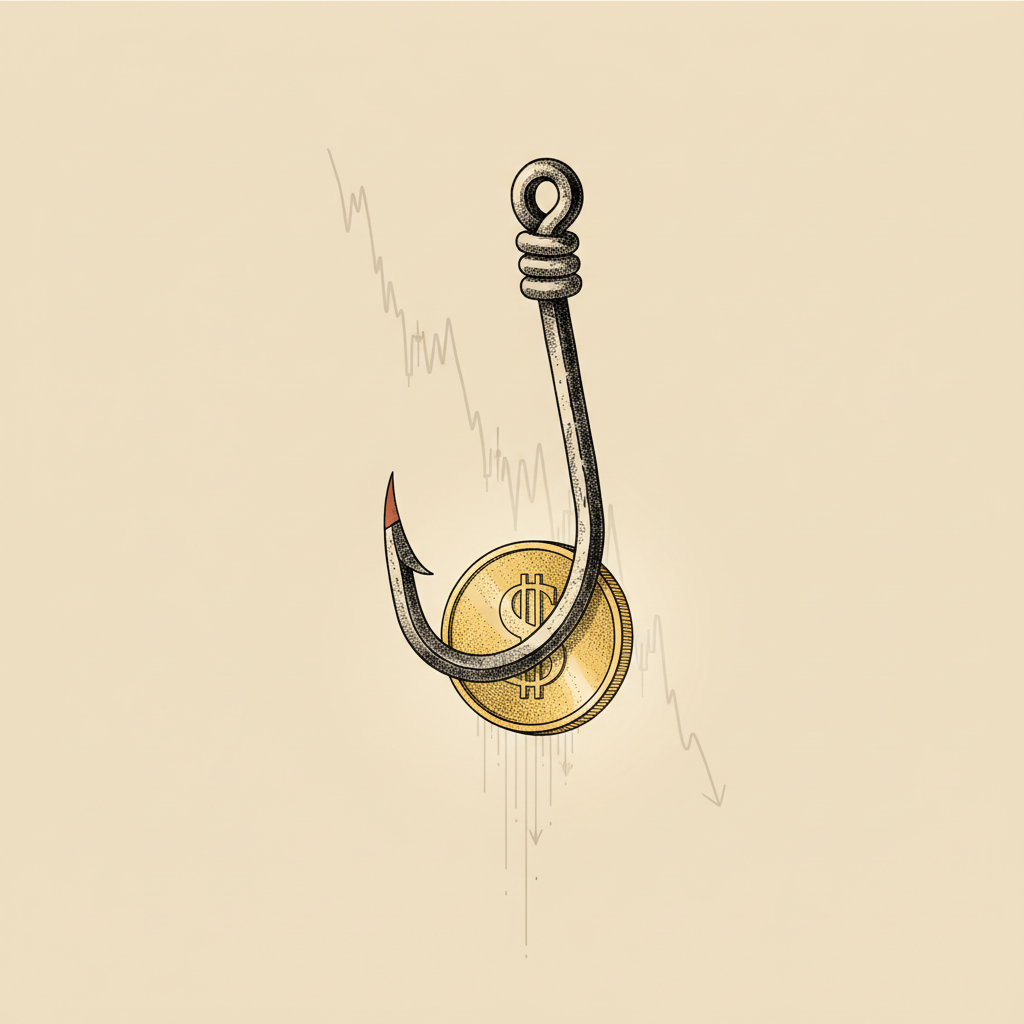
So Amazon's lawsuit is less about protecting customer safety than about protecting the toll itself. In Buffett's terms: when the travelers on a toll bridge start looking for alternate routes, and the bridge owner's first instinct is to "legislate against detours," that itself proves the moat is far shallower than the financials suggest. A bridge that is truly irreplaceable does not need a courtroom to keep traffic flowing. To judge whether a company's moat is an active choice or a passive lock-in, start by understanding what an economic moat really is.
Munger's Inversion: Whose Incentives Is AI Reshuffling?
Charlie Munger's famous line: "Show me the incentive and I'll show you the outcome." To understand this war, ask what happened to each party's incentives once AI agents entered the picture.
For consumers, the incentive is crystal clear — they want cheaper, faster, easier, and AI agents are 100% on their side. For sellers, incentives begin to split: those who win on product quality welcome AI (it amplifies the weight of "genuinely good"), while those who win by buying ads and gaming rank get exposed by it. For Amazon itself, a fatal internal contradiction emerges: it loudly rolls out its own AI shopping assistant Rufus and an "Agentic Shopping Assistant" toolkit, encouraging agentic commerce — while legally blocking third-party AI agents.
That contradiction is exactly what Munger would fix on. Amazon does not oppose "AI buying things for you" — it opposes "an AI that isn't Amazon's buying things for you." Its goal is not to stop the trend, but to ensure this new shopping channel still passes through its toll gate. That is a coldly rational business choice — and a dangerous signal. When a company's moat must be maintained by rules like "my AI may, yours may not," its advantage has slid from product to gatekeeper privilege. And gatekeeper privilege is the very thing regulators love to dismantle.

Howard Marks's Second-Level Thinking: The Regulatory Tail
Oaktree's Howard Marks teaches investors to separate "first-level" from "second-level" thinking. First level: Amazon won the injunction, the moat held, bullish. Second level: the fact that Amazon needs an injunction to defend its moat is itself bearish — and it opens a far bigger tail risk: antitrust.
Recall that Amazon only just paid a $2.5 billion settlement in a 2025 Federal Trade Commission (FTC) case. Now it has voluntarily placed itself in an exquisitely sensitive position: a marketplace giant using legal force to stop independent AI agents from comparison-shopping for consumers, while simultaneously promoting its own AI agent. In the increasingly hawkish regulatory mood of Washington and Brussels, that practically invites a new question: "Is Amazon protecting consumers, or using its gatekeeper position to choke off competition?"
For a value investor, this is exactly what Marks calls the "risk you can't see" — it won't show up in next quarter's earnings, but in some quarter you don't expect, it can permanently reset the rules of the business in the form of a single ruling or a new regulation. When you value Amazon's marketplace profits, you are buying not just that 29% of revenue, but a growing regulatory tail along with it. To value a "great-story, heavy-tail" company soberly, run the regulatory scenario through a discounted cash flow valuation tool.
Peter Lynch's Essence Test: Is This a "Sell Goods" Business, or a "Sell Traffic" Business?
Peter Lynch insisted you should be able to explain, in one sentence, how a company makes money before you invest. For Amazon's retail arm, the most honest sentence may be: it is no longer merely a retailer that "sells goods," but a traffic machine that "sells consumer attention to sellers." Retail margins are thin; the fat, juicy part is advertising and seller services.
Once you see that essence, the lawsuit's meaning changes. What AI shopping agents threaten is not Amazon's logistics or its Prime membership flywheel — those remain formidable. What they threaten is the foundation of that high-margin "sell traffic" business: consumer attention. If AI agents become the default entry point, shoppers' eyes no longer rest on Amazon's ad slots, but on the objective answer the AI delivers. That 40–50% take-rate toll machine may not collapse, but its pricing power gets structurally eroded.
This does not make Amazon a bad investment — its cloud, logistics, and Prime ecosystem remain world-class moats. It simply reminds us that within the same company, the depth of the moat varies wildly by segment. Valuing Amazon as "one moat" is dangerous; the real work is to take it apart and ask of each business: is this customer choice, or interface lock-in? Examine them one by one through the masters' lenses, and you won't mistake "gatekeeper privilege" for "irreplaceable." In the investing masters library, you can see how Buffett, Munger, and Lynch each dissect this kind of business.
Recent posts















































Frequently asked questions
Why is Amazon suing Perplexity?
Amazon alleges that Perplexity's Comet AI browser disguised automated shopping as human activity, posing security and user-experience risks, and demanded it stop auto-purchasing on Amazon's site. Amazon won a federal temporary injunction in March 2026, which was subsequently stayed by the Ninth Circuit.
What is "agentic commerce"?
It refers to AI agents completing the entire shopping flow — search, price comparison, and checkout — on a human's behalf. By potentially bypassing a platform's search ranking and ad slots to deliver the objectively optimal answer, it threatens platforms that profit by "selling traffic."
Will AI shopping agents weaken Amazon's moat?
They mainly threaten Amazon's high-margin advertising and seller-services business, which depends on consumers personally using Amazon's interface. Moats like logistics and Prime remain strong, but the pricing power of the "sell traffic" business could be structurally eroded.
Don't mistake "gatekeeper privilege" for an "irreplaceable moat" — use Valuefocus master frameworks and valuation tools to take apart any giant's real competitive advantage:
Download Valuefocus