
Semiconductor Deep DiveAbout 11 minutes
After ASML Fell 8%: China’s DUV Push Has Not Breached the EUV Fortress—It Is Rewriting the Service Annuity
Investors treated domestic Chinese immersion DUV production as the end of ASML’s monopoly. The nearer target is different: the long stream of machine sales, parts, calibration, upgrades and service attached to ASML’s installed base in China. Why can a five-machine target erase tens of billions of dollars of market value from a company that earned €2.9 billion last quarter? The answer sits in the layers of the moat—and in terminal value.

Why Five Machines Erased Tens of Billions in Market Value
The Information reported that a Shanghai state-backed company had started producing domestic immersion DUV systems for SMIC, Hua Hong and CXMT, targeting roughly five units in 2026 and 20 in 2027. Reuters later reported that ASML fell as much as 8.2% and was still down about 6.7% late in the session.
The reaction looks disproportionate. ASML’s Q2 2026 release showed €9.326B of revenue and €2.918B of net income. It plans to add 30% to 2026 immersion-DUV capacity of roughly 130 systems in 2027. Five Chinese tools equal only about 3.8% of that annual capacity.
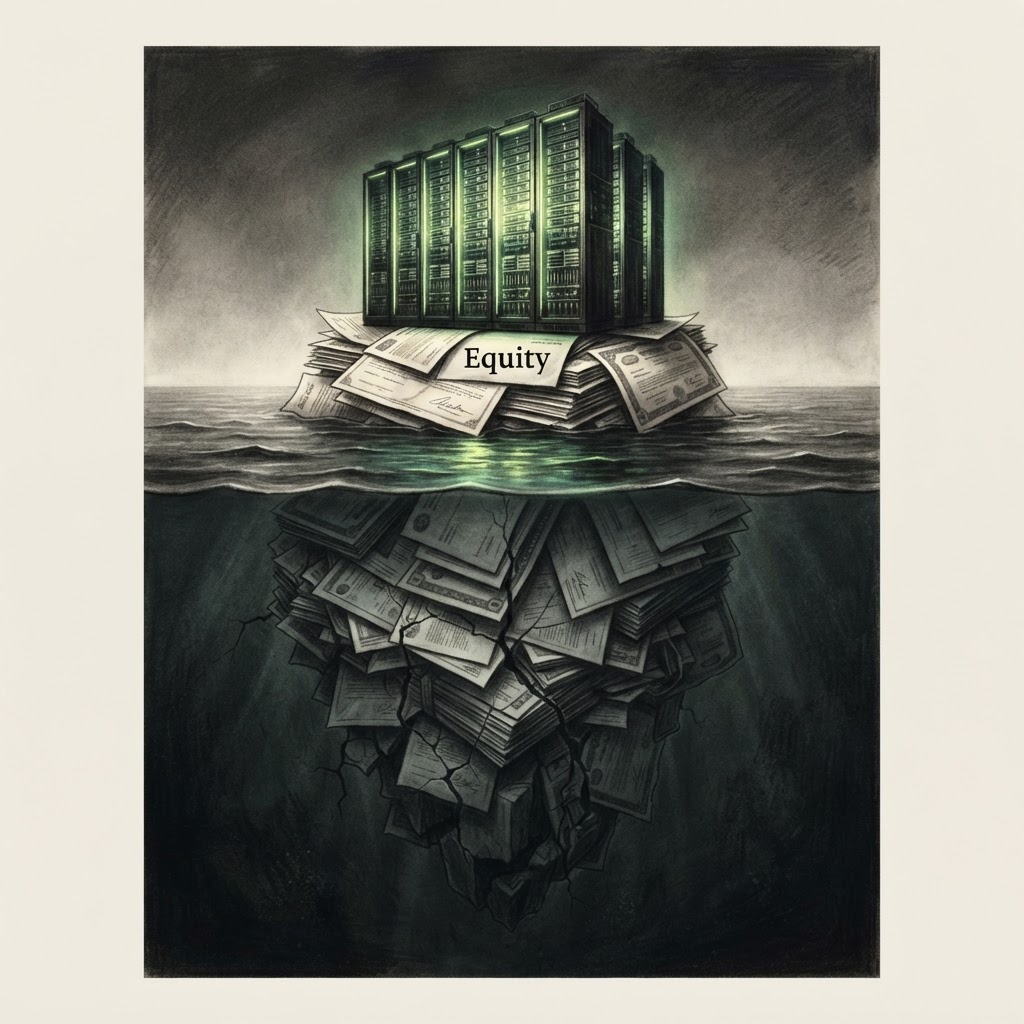
The stock was not pricing five machines. It was adding a terminal-value branch that did not exist before: qualification creates learning data, learning data improves reliability, and reliability can become substitution. The new question is how much charging power ASML retains in China over the next decade.
| Metric | Verified fact | Easy conclusion | Better question |
|---|---|---|---|
| Domestic immersion DUV | ~5 units in 2026; ~20 in 2027 | Too small to matter | How quickly do availability and customer qualification improve? |
| ASML 2026 immersion capacity | ~130 systems | Overwhelming scale lead | Will China orders and service remain licensable? |
| ASML Q2 sales / net income | €9.326B / €2.918B | Fundamentals are strong | Does current profit hide a China terminal-value change? |
| Market value | ~$725.5B on Aug. 15 | The moat is fully priced | How many monopoly years does that price require? |
Do Not Write a DUV Breakthrough as an EUV Collapse
ASML’s moat has three layers. The first is DUV, used across mature production and many advanced-node steps. ASML sold about €12B of DUV systems in 2025, delivering 279 machines, 47% of them immersion systems. This is the broad layer domestic tools attack first.
The second layer is the installed base. Calibration, parts, software, capacity upgrades and field service monetize a machine for years. ASML reported €8.193B of 2025 service and field-option revenue, up 26.2%. By Q2 2026, the stream represented 29.6% of quarterly revenue.
The third layer is the EUV core: light source, mirrors, software and thousands of suppliers meeting extreme precision requirements. Domestic DUV production is an engineering milestone, not evidence that the EUV ecosystem has been replicated. The investable question is which layer narrows first and how fast.
China Exposure Fell From 36.1% to About 15.9%
LatePost reported in 2025 that mainland China generated 36% of ASML’s 2024 revenue—more than €10B—and that local headcount had nearly doubled in five years to over 1,900 as the company expanded repair capacity. This was an installed-base network, not a simple export business.
ASML’s filing put China at 29.1% of 2025 sales. In the first half of 2026, China produced €2.883B of €18.093B in revenue, or about 15.9%. Half-year and full-year mixes are not perfectly comparable, but the direction is unmistakable.
Munger would inspect incentives. Export restrictions reduce certainty around purchases and maintenance, giving Chinese fabs a reason to qualify imperfect local equipment. Policy protects ASML’s technology lead while subsidizing a rival’s first customers and learning loop.

Three Master-Investor Questions
Buffett, Munger and Howard MarksMoat, incentives and second-level effects
- Buffett’s moat test: Do not ask whether ASML is still a monopoly. Ask whether it can keep pricing, service renewals and customer returns in China. A technology gap can persist while charging power disappears.
- Munger’s incentives: Chinese fabs qualify local tools to avoid supply interruption, not merely to support a national narrative. Survival incentives make customers absorb early debugging costs—the hardest learning asset for a challenger to obtain.
- Marks’ second-level thinking: Five tools are tiny relative to 130. But five can change terminal value. Conversely, DUV competition does not erase EUV, global demand or the existing service stream. Both second-order effects belong in the model.
Put Three Outcomes Into a Reverse DCF
Slow qualification: domestic DUV remains a small pilot while ASML expands globally. The company delivers its €43B–€45B 2026 sales guide and 54%–56% gross margin. The July decline then looks like distant risk forced into near-term earnings.
Partial substitution: domestic systems enter mature nodes and improve through multi-patterning. ASML retains EUV and premium service, but China DUV orders and installed-base growth slow. Reduce China system sales and service growth rather than cutting the global franchise.
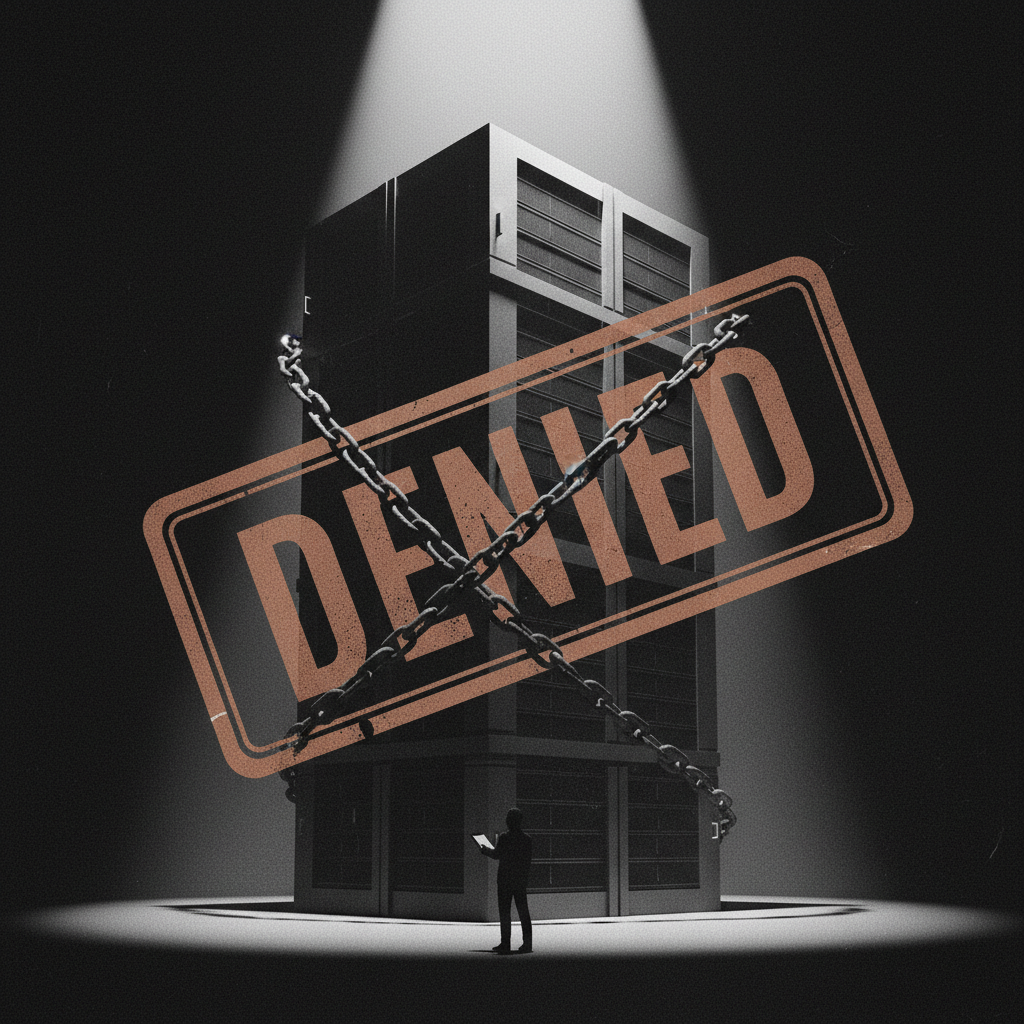
Service decoupling: restrictions expand to parts and field maintenance as domestic tools reach an acceptable threshold. ASML loses not just one year of system sales but years of upgrades and service cash flow. Even a low probability deserves a separate terminal-value haircut.
Use the Valuefocus reverse DCF calculator to vary China mix, service growth, gross margin and moat duration against the current roughly $725.5B market value. You do not need to predict the exact replacement year; you need to see how many years of three-layer moat the price requires.
| Scenario | System-sales assumption | Service assumption | Valuation action |
|---|---|---|---|
| Slow qualification | Limited China substitution | Installed-base service grows | Use global capacity and company guide |
| Partial substitution | China DUV share erodes | Growth slows, not zero | Cut China cash flow; raise discount rate |
| Service decoupling | China new systems near zero | Maintenance restricted or migrates | Separate and heavily discount China terminal value |
TikHub’s Split Is a Research Signal, Not Evidence
A Valuefocus TikHub pull on August 15 classified a 10-post $ASML sample as 30% bullish, 20% bearish and 50% neutral. The “ASML China DUV” feed split between claims that the new tools had broken a monopoly and arguments that $43B of spending still could not reproduce decades of suppliers and tacit knowledge.
The sample is small, and keyword rules can misread sarcasm, reposts and multilingual text. It cannot replace fundamentals. It does reveal the two extremes: extrapolating one engineering milestone into EUV parity, or treating low initial volume as proof that substitution never happens.
Use social media as radar, not referee. Find disagreement with the social sentiment radar, then return to filings, installed base, service revenue and customer qualification. News tells you where the fire started; valuation tells you whether it reaches cash flow.
Recent posts


































Frequently asked questions
Does China’s DUV production end ASML’s EUV monopoly?
No. The report concerns immersion DUV. ASML remains the only commercial supplier of advanced EUV systems. Track qualification, throughput, availability and yield rather than treating DUV and EUV as interchangeable.
Why can five domestic tools affect ASML’s valuation?
The direct revenue impact is small. If the first machines establish customer qualification and a learning curve, they can alter years of China DUV systems and installed-base service cash flow.
Which metrics matter most?
China revenue mix, DUV orders, service and field-option revenue, domestic deliveries and fab qualification, export-license scope and the serviceability of ASML’s China installed base.
Do not choose between “ASML’s monopoly is permanent” and “domestic lithography replaces everything.” Model China systems, the service annuity and the EUV core as three scenarios in Valuefocus.
Download Valuefocus