
Deep Investment Research15 min read
The Real Risk in Anthropic’s IPO Is Not Shrimp Welfare—It Is That Shareholders May Never Control the Company
The Information connected Anthropic’s prospective IPO to shrimp welfare and other effective-altruist causes. The headline is absurd; the governance question is not. A company valued at $965 billion with $47 billion in run-rate revenue may ultimately have a board majority selected by five financially disinterested trustees. Public investors are debating whether 20 times revenue is expensive while overlooking what they actually own.

An Absurd Hook Reveals a Serious Trillion-Dollar Question
The Information reports that IPO wealth may refill effective-altruist causes including farmed-animal welfare, global health, biosecurity and AI safety. Several Anthropic leaders signed the Giving What We Can pledge to donate at least 10% of income.
TikHub/X discussion split predictably between admiration for measurable, neglected causes and anger at elites setting social priorities. Both sides blur private wealth donations with corporate capital allocation.
Animal Charity Evaluators says Shrimp Welfare Project can absorb $3.6M annually in 2026–27 and may help more than 1,000 animals per dollar. The investment question is not whether that estimate is persuasive. It is whether the same objective function enters the boardroom. It does.
Behind the $965 Billion Valuation, Shareholder Control May Be a Minority Position
Anthropic says it raised $65B at a $965B post-money valuation and crossed $47B in run-rate revenue—an implied multiple near 20.5 times. Social posts compare that starting point with Google’s roughly $23B IPO valuation, capturing how much future return may already be prepaid.
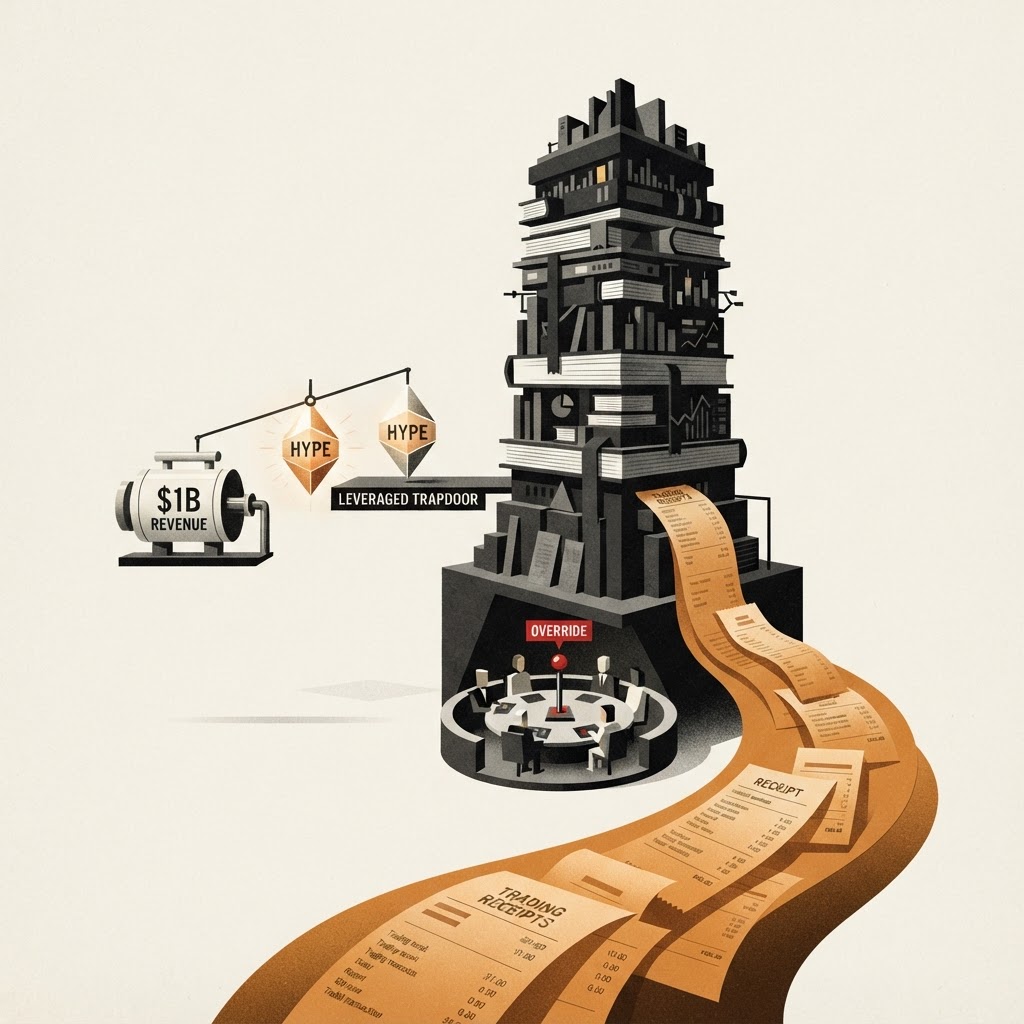
Anthropic is a Delaware public benefit corporation with a Long-Term Benefit Trust. Five trustees with no financial interest hold special Class T shares. Their right to select directors expands with time and funding milestones until they elect a majority.
The governance design begins with one of five directors, then two, then three. Public shareholders bear commercial downside but may never hold the ultimate power to replace the board majority.
| Variable | Public figure or structure | Investment meaning |
|---|---|---|
| Post-money valuation | $965B | Near-trillion starting point |
| Financing | $65B | Exceptional capital need |
| Run-rate revenue | Above $47B | Already massive scale |
| Implied multiple | About 20.5x | Needs sustained growth |
| LTBT trustees | Five | No economic interest |
| Ultimate seats | Board majority | Risk and control separated |
This Is Not an Ordinary Dual-Class Discount
Founder super-voting structures usually leave controllers with large economic stakes. LTBT intentionally removes financial temptation. That is a feature for mission integrity and an agency problem for minority shareholders.
If trustees stop a highly profitable model because of safety, they may be perfectly faithful to the charter. PBC status permits the board to balance shareholders, affected parties and the long-term benefit of humanity.
A conventional DCF assumes approximate long-term cash-flow maximization. Anthropic explicitly makes cash flow one objective among several. The hardest input is the future weight assigned to profit, safety, national security and social stability.

Mission Can Be a Moat—or a Permanent Tax on Capital
Independent safety governance can build enterprise trust, attract talent, reduce regulation and prevent a catastrophic deployment. If it avoids one existential incident, it can create enormous economic value.
New York Magazine reported that employee commitments of up to 25% of shares may receive company matching. Personal philanthropy is distinct from corporate expense; investors need the match ceiling, authorization and accounting.
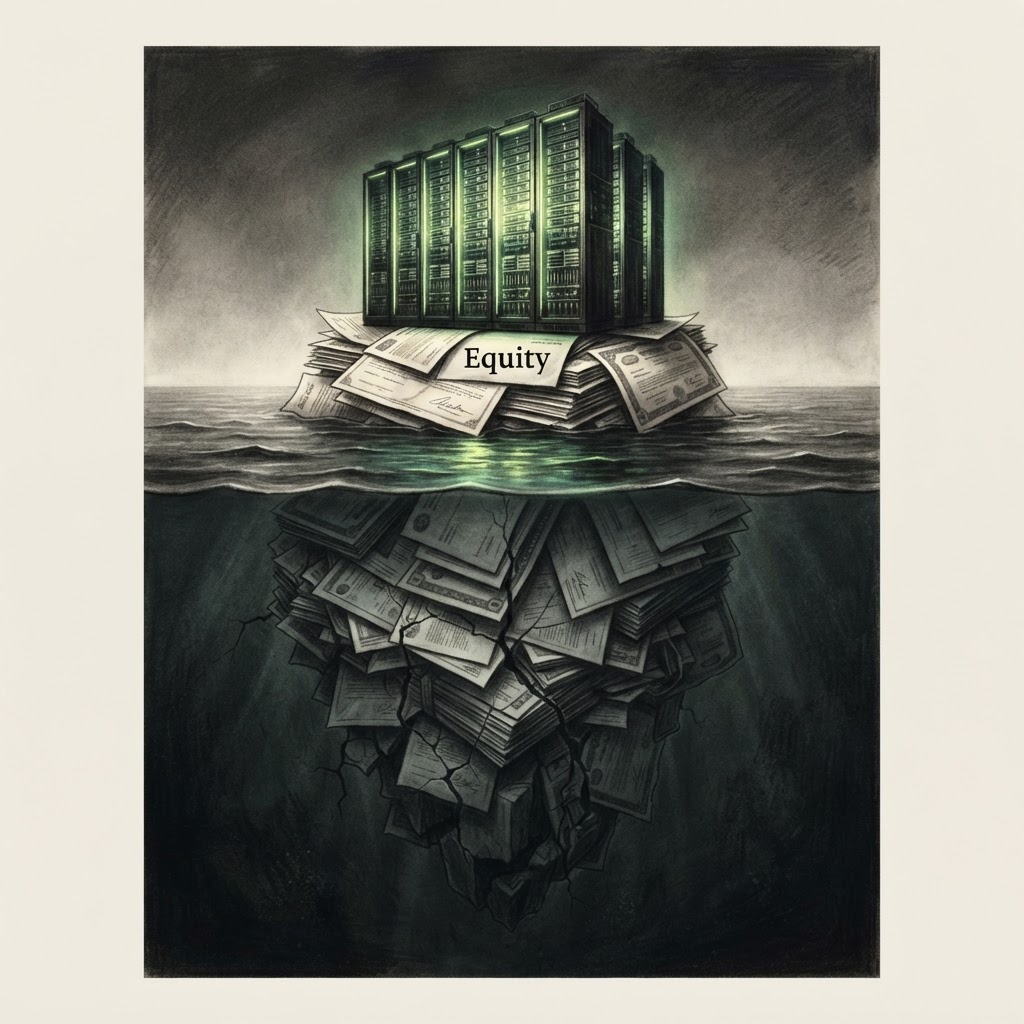
The risk is not a $3.6M shrimp program moving a $965B valuation. It is mission scope without a market price. Safety, labor displacement, bio-risk, policy and global equity can all fit “long-term benefit,” making cash-flow commitments less enforceable.
How the Masters Would Price It
Buffett would ask who defines long-term benefit, who corrects mistakes and who bears their cost. Graham would not pay a premium for a distant mission when capital intensity and normalized margins remain uncertain.
Howard Marks would wait for the first real collision between mission and profit—the second-level risk markets may not price. Munger would distrust benevolence without rapid feedback.
Philip Fisher might accept the structure if customer interviews prove it wins trust, talent and lower tail risk. He would verify commercial effects, not accept abstraction.
Seven Boundaries to Find in the S-1
Look for LTBT seats and triggers; shareholder enforcement rights; the vote needed to alter the PBC purpose; charitable-match caps; disclosure for safety-driven product delays; strategic-investor vetoes; and related transactions with mission organizations.
Model enterprise, API, consumer and coding revenue separately. Do not treat a $47B run rate as audited recurring revenue. Add scenarios where governance raises retention, delays a major product, or constrains commercialization while capital spending continues.
Use the Valuefocus DCF calculator to raise the discount rate and reduce terminal multiples for missing control, then test the price with the margin-of-safety calculator.
Shrimp welfare is a superb news hook and a poor investment conclusion. The real choice is whether investors will provide permanent capital near a trillion-dollar price while accepting that they are not the ultimate principal. The trust may become AI’s most valuable governance innovation—or a permanent discount the market has never priced.
Recent posts








































Frequently asked questions
What are Anthropic’s latest valuation and revenue?
Anthropic says its May 2026 Series H valued it at $965B post-money and run-rate revenue exceeded $47B, implying roughly 20.5 times revenue.
What is the Long-Term Benefit Trust?
An independent body of five financially disinterested trustees holding Class T shares, with power that expands until it can elect a board majority.
Will shrimp welfare use Anthropic corporate funds?
Current coverage mostly concerns founder and employee wealth plus donation matching. Investors should wait for offering disclosures on matching limits and funding.
Does mission governance necessarily hurt returns?
No. It may improve trust, talent retention and tail-risk control, but financially disinterested control creates material agency and objective-function risk.
Do not pay for AI growth alone. Use Valuefocus to separate revenue quality, capital needs, control rights and mission risk.
Download Valuefocus