
Industry Analysis12 min read
The Market Is Paying $647 Billion for a Foundry That Still Loses Money: Is Intel's +221% Turnaround a Real Moat, or Retail FOMO?
A stock that more than triples in six months almost always provokes the same question: is this the long-overdue re-rating of an undervalued asset, or another FOMO-driven story-stock frenzy? Intel is 2026's textbook answer.

A Triple-Digit Headline: Value Re-Rating, or Momentum Mania?
The most dramatic semiconductor story of 2026 isn't Nvidia, nor TSMC — it's the old giant whose obituary had been written three years running: Intel. Year-to-date, the stock has soared 221%, climbing from single-digit despair to around $134, lifting its market cap back above $647 billion. Across social feeds and retail forums, the "king of turnarounds" narrative is everywhere: five process nodes in four years, 18A yields rivaling TSMC, rumored Apple orders coming home, and a U.S. government equity stake via the CHIPS Act.
It's a seductive story. But the value investor's first reflex is always the same: set the narrative aside and ask what price you are paying. Here, the numbers are unsettling — a forward P/E of 113x and a price-to-book of 5.39x. For a company growing revenue in the single digits, whose core foundry transformation is still deeply loss-making, that is a valuation paid in advance for a flawless future.
The Information-style question is never "will Intel turn around?" It is "how much has the market already paid for that turnaround, and how much will you lose if execution is anything short of perfect?" This piece doesn't argue the former — the technical comeback is real. It answers the latter: at $134, are you buying a moat, or somebody else's FOMO?
Graham's Margin of Safety: When the Price Sits 40% Above the Analyst Target
The father of value investing, Benjamin Graham, built his philosophy not on "buy great companies" but on "buy at a price far below intrinsic value." That discount is the margin of safety. Its job is not to guarantee gains, but to protect you from ruin when your judgment is wrong.
Hold that ruler up to Intel and the result is jarring: the stock trades near $134, while the average Wall Street price target is only about $95. In other words, the market price already sits nearly 40% above the analysts' consensus estimate of fair value. The margin of safety hasn't merely thinned — it is negative. You are not buying a dollar of assets for eighty cents; you are paying $1.40 for a dollar's worth of story.
Graham would warn that when a stock's price runs far above the upper bound of any prudent valuation, it has slid from investing into speculation. That doesn't mean it falls tomorrow — it means you've lost your room to be wrong. Before anyone chases this rally, run it honestly through a margin of safety calculator: at $134, how much downside protection is actually left?
Buffett's Moat Test: Is Foundry a Great Business, or a Cash Furnace?
Warren Buffett evaluates a business by its economic moat and its return on capital. The bull case for Intel rests on its metamorphosis from an integrated device manufacturer (IDM) into a "foundry powerhouse" going toe-to-toe with TSMC. The problem: contract chip manufacturing is the most capital-intensive business on earth, with a moat that depends on the trinity of scale, yield, and customer trust — and on all three, Intel is still the challenger.
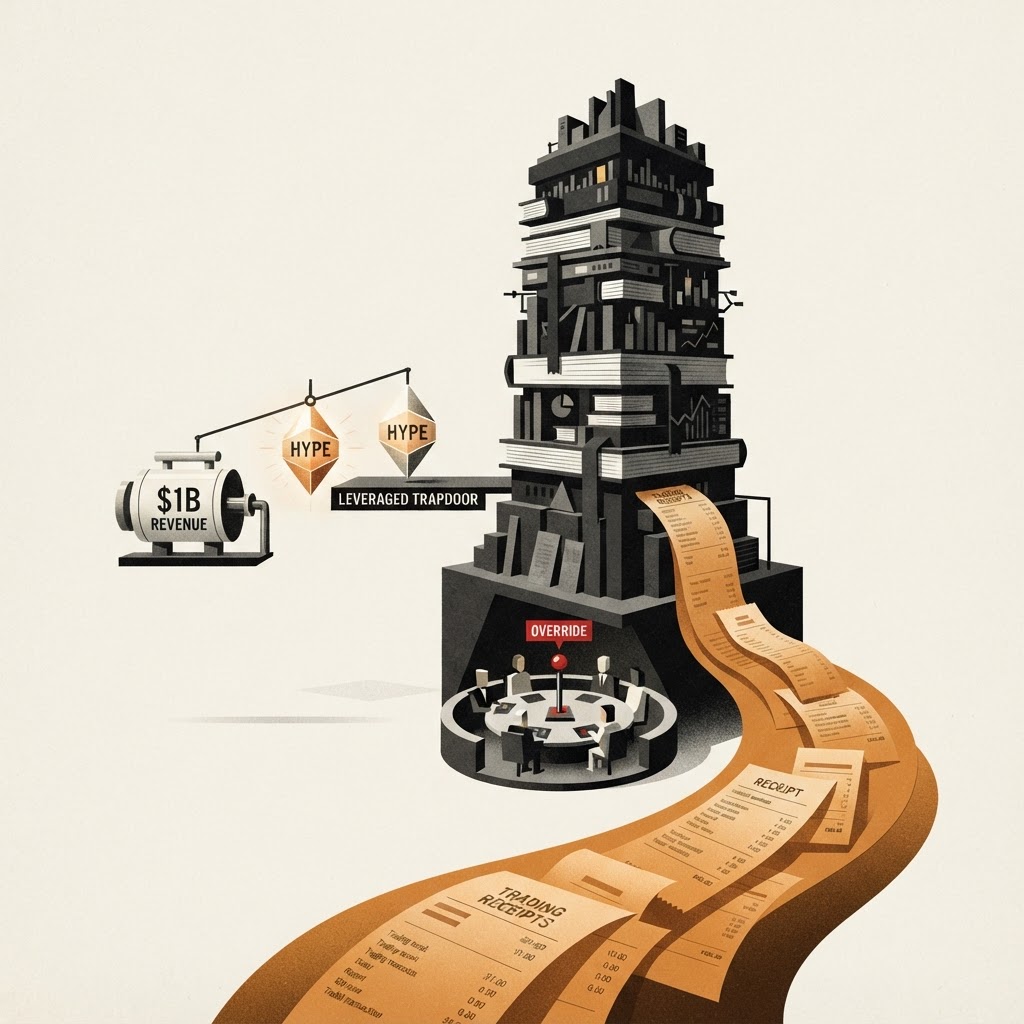
The financials deliver a sober reality. In Q1 2026, Intel's Foundry segment posted an operating loss of about $2.4 billion. Company-wide revenue was roughly $13.6 billion, up about 7% year-over-year, with gross margin back to 41% — fundamentals are genuinely improving, but "improving" and "worth 113x earnings" are two very different statements. The market has priced a business still burning $2.4 billion a quarter as "the next TSMC," and between those two points lies enormous execution risk: 18A volume yields, whether Apple orders actually land, and whether advanced packaging can scale.
Buffett prefers businesses that have already proven they can generate high returns on capital — not capital-heavy gambles that require years of flawless execution just to break even. Intel's valuation today is betting on the latter. It's why many seasoned investors file it not under undervalued bargain, but under "growth trap": the good news is fully priced, while the bad news still has plenty of room to arrive. The inverse of a value trap, and just as dangerous.

Howard Marks's Pendulum: How FOMO Turns a Good Story Into a Bad Investment
Oaktree's Howard Marks reminds us that the most dangerous moment in investing is often not when a bad company is overvalued, but when a good story is pushed to its extreme. Intel's pendulum has, over the past twelve months, swung from "hopeless decliner" all the way to "can't-miss turnaround king" — and the truth almost never lives at either end of the arc.
Social sentiment is the amplifier of this frenzy. On retail forums and short-video platforms, Intel has been wrapped in the iconography of "patriotic semiconductors" and "American manufacturing revival," where technical detail is replaced by slogans and valuation is buried under momentum. This is the textbook absence of what Marks calls "second-level thinking": everyone knows Intel is turning around (first level), but few ask how much of that turnaround is already reflected in a $647 billion market cap (second level).
Marks's caution is simple: when an asset's price is driven mainly by the fear of missing out rather than by discounted cash flows, the risk-reward scale has already tipped. You can simultaneously believe that "Intel's technical turnaround is real" and that "buying it at $134 is terrible risk-reward" — the two are not in conflict. Set the emotion aside and run a cold discounted cash flow valuation; you'll discover just how aggressive the assumptions must be to justify today's price.
The Investor's Response: Three Checks for Any "Turnaround Stock"
Intel is not a one-off. It is the archetype of the "turnaround story stock" that appears in every bull market. Facing this kind of name, the value investor can run a quick three-question diagnostic:
First, is the turnaround already realized, or still promised? Look at cash flow, not press releases. The foundry segment still loses $2.4 billion a quarter, which means the single most important proof — profitability — has not yet arrived. You are buying a promise, not a fact. Second, how much room for error has the price left you? A stock nearly 40% above the average analyst target, at 113x earnings, means the margin of safety is negative; any yield miss or lost order opens deep downside. Third, is your reason to buy "valuation" or "not wanting to miss out"? If it's the latter, you aren't investing — you're playing a momentum game priced by emotion.
A turnaround can be real and the stock can still be a terrible buy — great investors are great precisely because they can hold both of these seemingly contradictory judgments at once. Intel's story is the reminder that, in investing, "the right company" and "the right price" are two separate questions, and the latter is forever the value investor's last line of defense.
Recent posts














































Frequently asked questions
Why did Intel stock rise so much in 2026?
The market is betting that its "five nodes in four years" process catch-up succeeds, that 18A yields rival TSMC, on rumored Apple foundry orders, and on a U.S. government equity stake via the CHIPS Act — re-rating Intel from a legacy chipmaker into a "sovereign foundry powerhouse."
Is Intel's valuation expensive right now?
By value-investing standards, quite expensive: as of late June 2026, the forward P/E is around 113x and price-to-book is 5.39x, and the stock trades nearly 40% above the average Wall Street price target (about $95), leaving a negative margin of safety.
Is Intel's foundry segment profitable yet?
Not yet. In Q1 2026, Intel's Foundry segment still posted an operating loss of about $2.4 billion. The key proof of profitability — 18A volume yields and major customer orders — is still in progress.
Don't pay for someone else's FOMO at the top — use Valuefocus master frameworks and valuation tools to compute the real margin of safety on any "turnaround stock":
Download Valuefocus