Conclusion first
The report opens with the verdict and the reasoning behind it — no burying the answer under twenty paragraphs of context.
 Valuefocus
Ask Valuefocus about any ticker and receive one structured report — conclusion first, then valuation, trend, risks, and exactly what to research next. No fifty open tabs. No headline soup.

AI-driven stock analysis uses a language model to turn a single ticker into a structured research report — conclusion, valuation context, fundamental trend, specific risks, and next research steps — instead of a pile of headlines and disconnected metrics. Valuefocus applies the same value-investing structure to every company, so analyses stay consistent and comparable.
Type a ticker and get an instant, AI-generated educational valuation snapshot — a taste of what the full app does.
Educational only — AI-generated, not financial advice or a buy/sell/hold recommendation. Always do your own research.
See how a Valuefocus report compares with the way most investors actually research stocks.
| Manual googling | Generic AI chatbot | Valuefocus report | |
|---|---|---|---|
| Starting point | Dozens of tabs and headlines | A blank prompt you must engineer | Just the ticker |
| Structure | None — notes scattered everywhere | Different shape every time | Same disciplined format, every report |
| Valuation | Whatever a blog claims | Often missing or hand-wavy | Explicit valuation framing each time |
| Risks | Found after you buy | Generic boilerplate warnings | Specific risks for this business |
| Next step | Unclear — research just stops | Conversation drifts | A concrete "research next" list |
The hard part of stock research is not finding information. It is stopping — with a conclusion you can defend.
Most investors collect facts endlessly and never reach a structured verdict. A research session needs an ending: this is the thesis, this is the valuation context, these are the risks, and this is what I still need to verify.
Every Valuefocus report follows the same value-investing skeleton, so your thinking stays comparable across companies and across time.
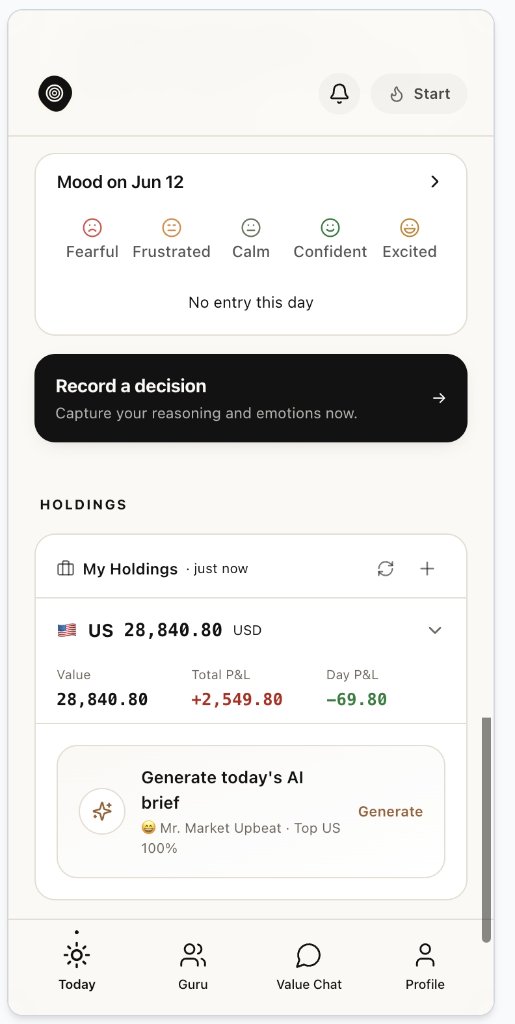
The report opens with the verdict and the reasoning behind it — no burying the answer under twenty paragraphs of context.
Where the business stands on valuation, how fundamentals are trending, and what assumptions the current price implies.
The specific ways this thesis breaks, plus a concrete list of what to verify next — turning a report into a research plan.
Refresh the thesis on a holding before the print, so you react to results with a framework instead of emotions.
A friend mentions a ticker. Instead of an hour of tabs, get a structured first read in minutes and decide if it deserves real work.
Positions drift from their original thesis. A fresh report shows whether the reasons you bought still exist.
Type the company name or symbol — AAPL, Costco, anything listed.
Conclusion, valuation, trend, risks, and next research, in one readable page.
Push back in Value Chat or run it through a master lens for the opposing case.
Record what you concluded and why — your future self will check your work.
Copy one of these into the app to see a report take shape.
No. The report gives a structured research conclusion, valuation context, and risks — but never a buy/sell/hold instruction. The decision, and the responsibility, stay with you.
A general chatbot produces a differently shaped answer every time and rarely commits to valuation framing. Valuefocus enforces one value-investing report structure, so your research is consistent and comparable.
Treat it as a structured first read and a research plan, not the final word. The "next research" section exists precisely so you keep verifying with filings and primary sources.
Ask your first ticker today:
Download Valuefocus