Official product information and workflow-level feature comparison.
Compare
Valuefocus vs. TradingView
TradingView is the world's most popular charting platform, built for technical analysis and active trading. Valuefocus is a mobile-first app built around fundamental valuation discipline. They serve almost opposite styles of investing — this page lays out the differences factually.
 ValuefocusVS

Plans change over time. Confirm current terms with the provider.
What Valuefocus does better
Valuefocus goes beyond raw data — it turns research into a disciplined, focused valuation practice.
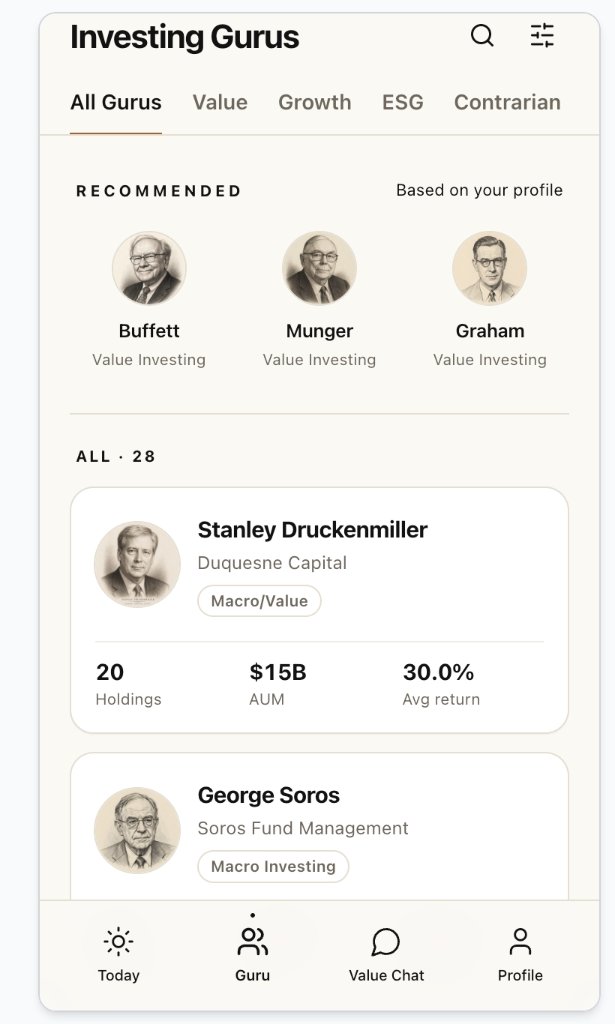
See every stock through a master's lens
Business-first: analysis starts from the company's economics, not its chart pattern.
Try Master Lens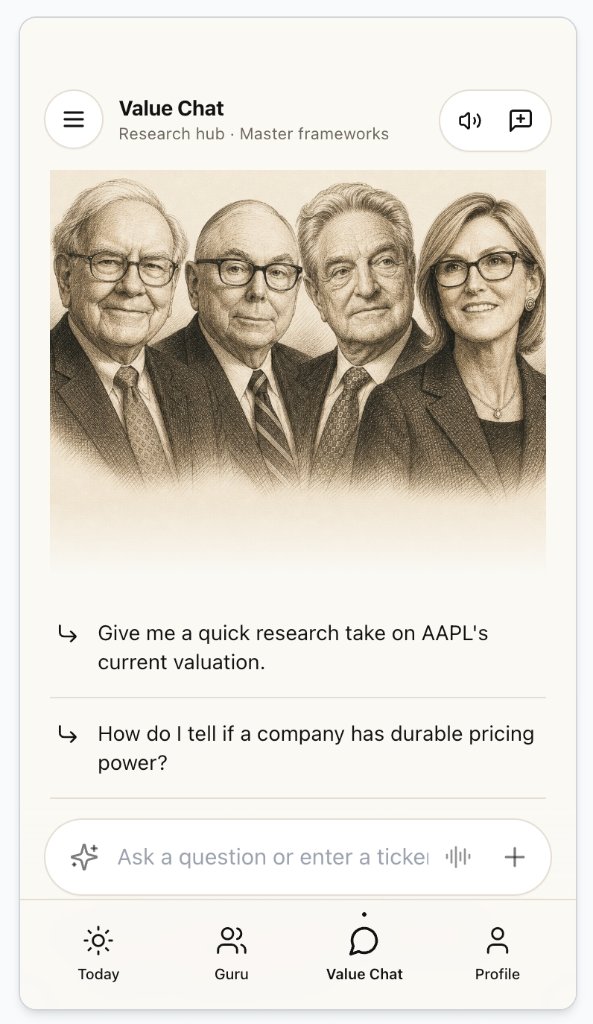
Ask anything in plain language
Guided valuation: structured DCF and margin-of-safety steps instead of indicator stacking.
Start a Value Chat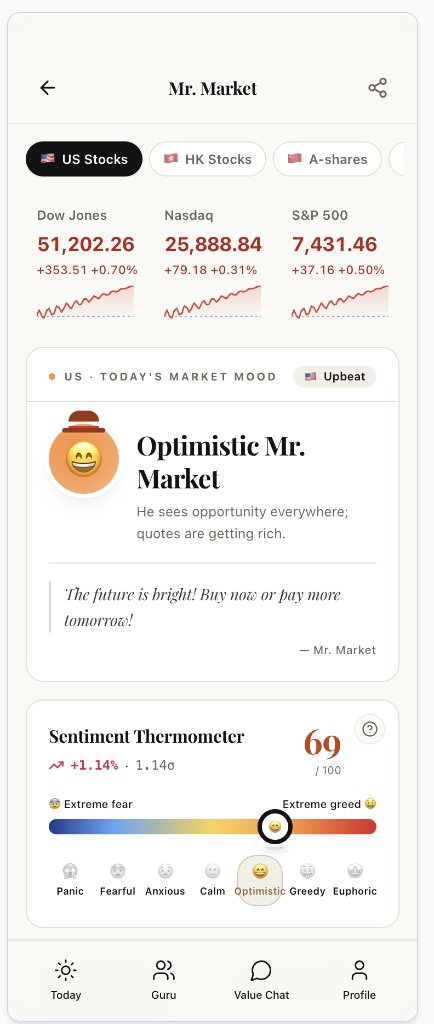
Read the market's mood, not your own
Fewer signals, better decisions: deliberately less screen noise to protect judgment.
See it in the app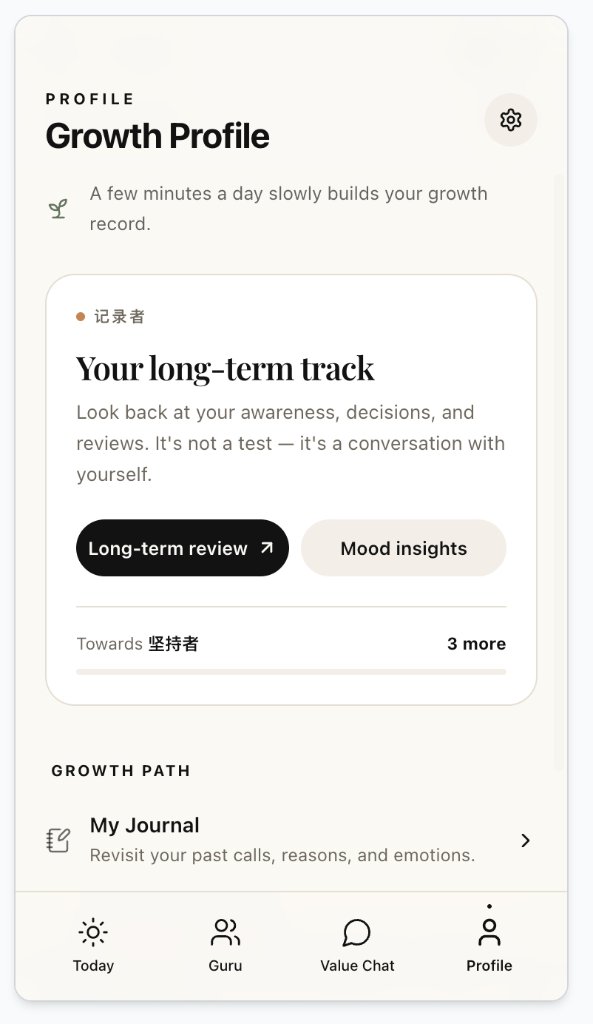
Record decisions, not just trades
Decision record: every conclusion is saved so you can audit your own reasoning later.
Start your journalTradingView is a charting and social-trading platform used by tens of millions of traders. Its strengths are real-time charts, hundreds of technical indicators, Pine Script custom strategies, and a large community publishing trade ideas.
Valuefocus is a mobile app centered on value investing: guided valuation workflows, master-investor mental models, and a record of your decisions. It cares about what a business is worth — not where the next candle goes.
Side-by-side overview
| Dimension | Valuefocus | |
|---|---|---|
| Primary platform | Mobile app | Web + mobile + desktop |
| Core approach | Fundamental valuation workflows | Technical charting and trading |
| Time horizon | Years (business ownership) | Minutes to months (price action) |
| Community | Personal, private research | Public trade ideas and scripts |
| Learning focus | Value-investing principles | Technical analysis and indicators |
| Best suited to | Long-term fundamental investors | Active traders and chartists |
Where TradingView is stronger
Charting: best-in-class real-time charts across nearly every asset class and exchange.
Technical tooling: hundreds of indicators, drawing tools, and Pine Script for custom strategies.
Alerts and screeners: powerful price and indicator alerts across global markets.
Community: a huge base of published ideas, scripts, and live discussion.
Where Valuefocus differs
Business-first: analysis starts from the company's economics, not its chart pattern.
Guided valuation: structured DCF and margin-of-safety steps instead of indicator stacking.
Fewer signals, better decisions: deliberately less screen noise to protect judgment.
Decision record: every conclusion is saved so you can audit your own reasoning later.
TradingView uses a freemium model: a capable free tier with ads and limited indicators per chart, plus paid Essential/Plus/Premium plans (billed monthly or annually) that unlock more indicators, alerts, and data. Confirm current pricing on their site, as tiers change.
Valuefocus is built so the valuation method is not paywalled: guided workflows, master-investor frameworks, and the calculators are made to be used. If you are searching for a free TradingView alternative specifically for fundamental valuation — not charting — Valuefocus targets that job directly.
If you trade price action and need professional charts, TradingView is the standard. If you buy businesses and need a disciplined process for deciding what they are worth, Valuefocus is built for exactly that.
Some investors use both: charts for timing context, a valuation workflow for the actual decision. Just be honest about which one is driving your choices.
The short answer
Business-first: analysis starts from the company's economics, not its chart pattern.
Charting: best-in-class real-time charts across nearly every asset class and exchange.
Some investors use both: charts for timing context, a valuation workflow for the actual decision. Just be honest about which one is driving your choices.
All comparisons
See how Valuefocus compares with every major research platform.
Frequently asked questions
Is there a free TradingView alternative?
TradingView has a capable free charting tier and paid plans. For fundamental valuation rather than charting, Valuefocus is a free-leaning alternative — its guided workflows and frameworks are built to be used without paywalling the method, though it is not a charting platform.
How much does TradingView cost?
It uses a freemium model with a free tier plus paid Essential, Plus, and Premium tiers billed monthly or annually. Pricing changes over time, so check their site for current figures.
Is Valuefocus a charting app?
No. Valuefocus is built around fundamental valuation workflows. It shows essential price context, but it is not a technical-analysis tool and does not aim to be.
Can TradingView do fundamental analysis?
TradingView displays fundamental data and some ratios, but its core design is charting. It does not provide a guided valuation process.
Are the comparisons here up to date?
They reflect publicly available information at the time of writing. Third-party features and pricing change — always verify on the vendor's own site.
Sharpen your investing with free email lessons
Practical guides on valuation, margin of safety, and reading businesses — straight to your inbox. No spam.
We respect your privacy. Unsubscribe anytime.Try the business-first approach on your phone:
Download Valuefocus