
Investing Frameworks10 min read
Bitcoin Miners Reborn as AI Data-Center Landlords: TeraWulf Lands a $19 Billion Anthropic Deal and Its Stock Soars — But Are You Buying a Moat, or a Cyclical Bet in a New Costume?
Overnight, miners who once lived and died by the bitcoin price have become "compute landlords" holding long-term contracts with AI giants. The story is sexy: 20-year deal, $19 billion, Google backstopping it. But hold up three rulers — Buffett's moat, Graham's balance sheet, and Peter Lynch's "never overpay for a story" — and the risk profile of this pivot comes into much sharper focus.
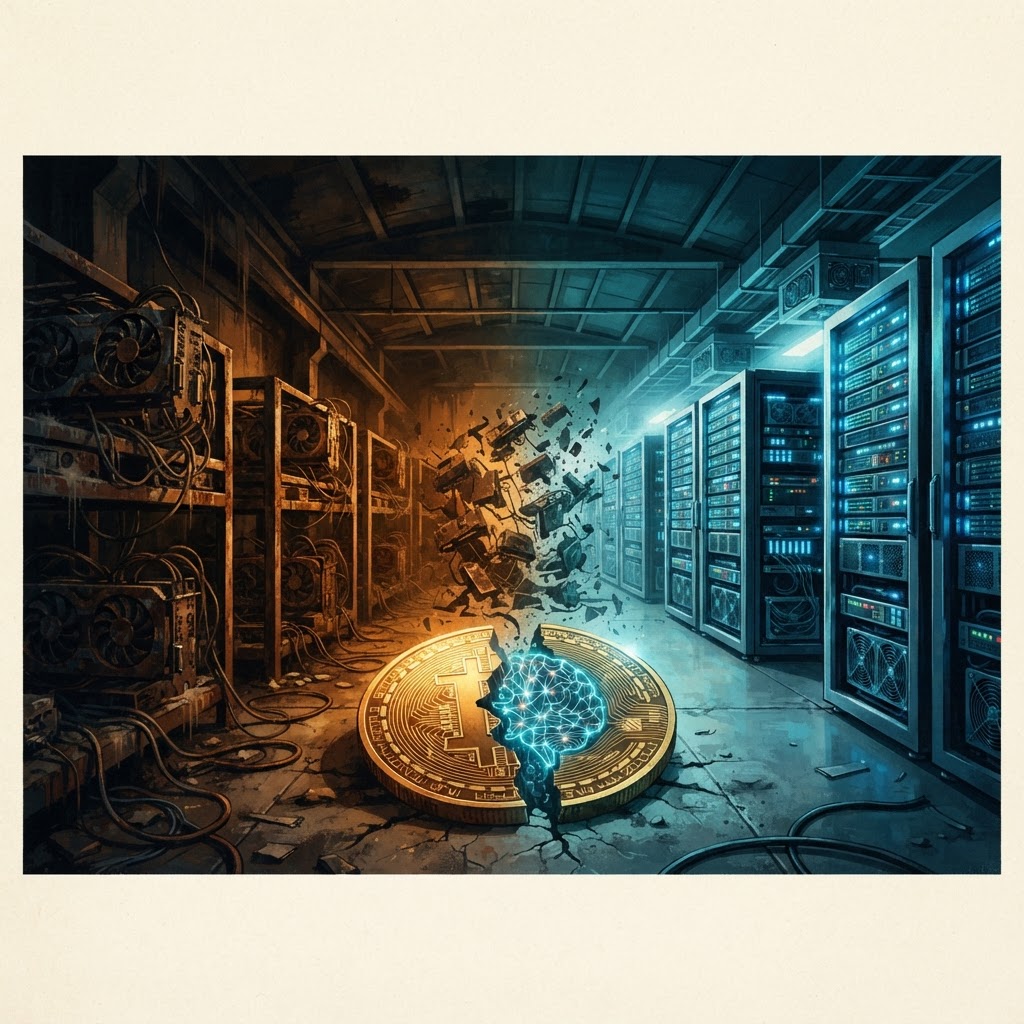
From "Betting on Coin Price" to "Collecting Rent": A Pivot Story That Sounds Too Good
In early July 2026, one piece of news lit up the entire crypto-and-AI crossover sector: bitcoin miner TeraWulf announced a 20-year data-center lease with AI giant Anthropic, estimated to generate about $19 billion in revenue. The stock jumped sharply the day it was announced and is now up more than 80% year to date. In the same week, a cluster of miner stocks including Hut 8 and Core Scientific rallied, many up over 90% YTD.
This pivot story is sexy because it solves the two biggest pain points miners have at once. First, it escapes the wild volatility of the bitcoin price — miners' fate used to be entirely strapped to that roller coaster. Second, it rents out cheap power and ready-built facilities that could previously only be used for mining, directly to AI labs starving for compute. Industry estimates suggest the same kilowatt-hour used for AI inference/training can earn 2 to 5 times more per unit than traditional mining. No wonder the market cheers: a glamorous upgrade from "betting on coin price" to "collecting rent."
The whole sector is placing the same bet. By industry tallies, bitcoin miners are chasing over $70 billion in AI data-center contracts. Overnight, the valuation narrative for these companies has been repackaged from "crypto cyclical" to "AI infrastructure growth stock." But it is precisely at the moment this "narrative switch" happens — when everyone believes the new story — that the value investor should do the opposite: hit pause on the story and pull out the rulers.
The Other Side of the Story: A Cyclical Bet in a New Costume, and a House Built on Debt
Start with an easily overlooked fact: the "AI landlord" business is not a moat that grew out of thin air — it is heavy assets bought with enormous debt. Converting a mining facility into a high-spec data center capable of running AI training requires colossal capital expenditure — power buildout, liquid cooling, redundant power supply, networking. Where does that money come from? The answer is debt.
TeraWulf's balance sheet tells the story: the company carries roughly $1.5 billion in outstanding debt, primarily convertible notes maturing in 2030 and 2031. To fund construction, it has repeatedly issued convertible notes (single offerings on the order of $850 million) and leaned on Google to backstop its lease obligations — a backstop that has been raised from an initial ~$1.8 billion all the way to roughly $3.2 billion, in exchange for Google taking about a 14% stake. In other words, a substantial part of the credit underpinning this "$19 billion deal" does not come from TeraWulf itself — it comes from Google's balance sheet.
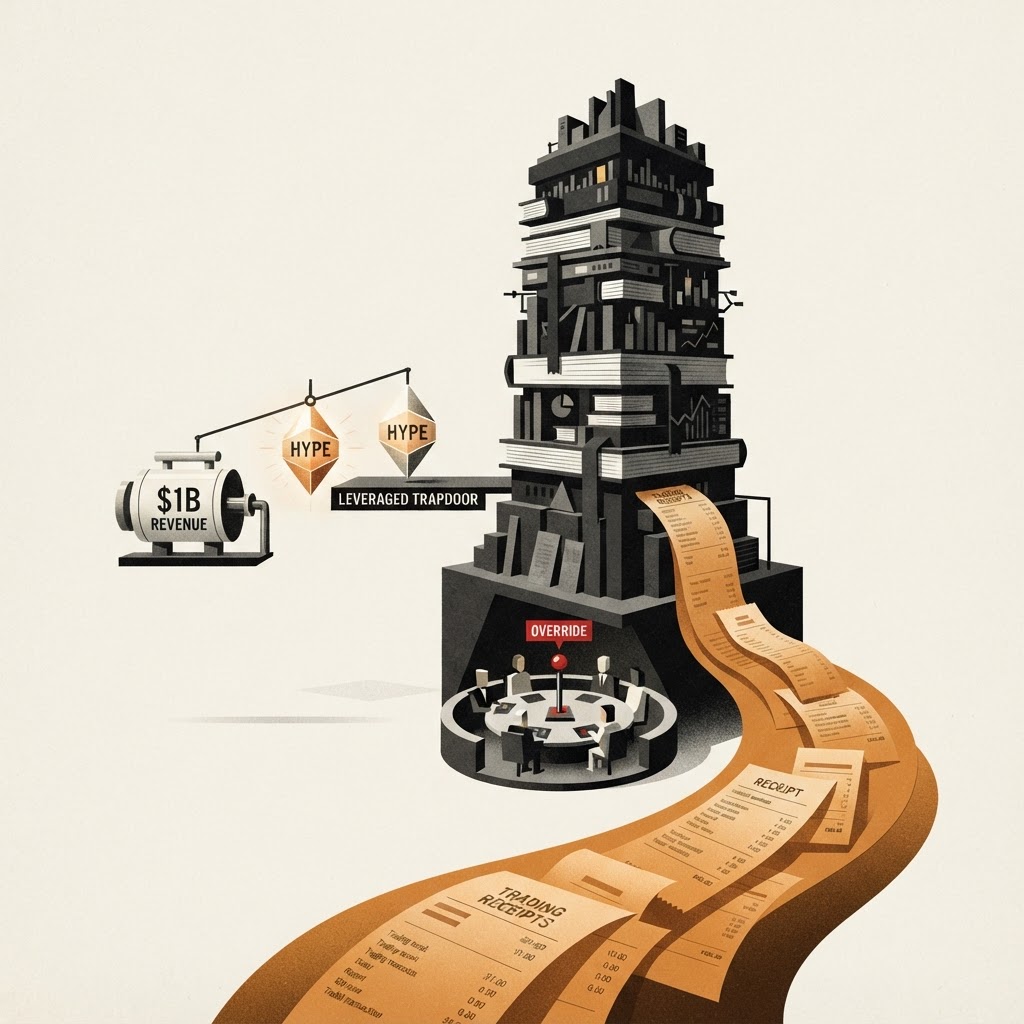
This surfaces the crux: the market thinks the miners have "escaped the cycle," but the more accurate description may be that they've swapped one cyclical bet (the bitcoin price) for a different bundle of risk: high leverage + single-customer dependence + heavy-asset depreciation. Coin-price volatility does vanish — replaced by interest-rate risk, refinancing risk, and the concentration risk of "what if that one big customer runs into trouble?" We dissected in our piece on how AI capex is devouring free cash flow how the heavy-asset-plus-high-debt combination can bite back the moment demand stumbles.
Buffett: This "Landlord" Business — Whose Moat Is It, Exactly?
The first ruler goes to Buffett. He would ask directly: where is this business's moat — and, crucially, is that moat yours, or someone else's?
The essence of the "AI landlord" model is renting out scarce power and land. In the short run, power and siting permits genuinely are scarce (we discussed that scarcity in the data-center permitting bottleneck), which gives first movers a temporary edge. But Buffett would press further: when the lease's credit has to be backstopped by Google, and when the real pricing power sits with a handful of giant AI customers, how much bargaining power does this "landlord" actually have? A landlord with a highly concentrated tenant base — whose credit even depends on that tenant's affiliate (Google is both backstopper and potential competitor) — has a fragile moat.
Buffett has spent his life favoring businesses that can set their own prices and make money even at the trough. Heavy-asset data-center leasing looks more like a "build-to-suit utility": returns locked in by contract, limited upside, but depreciation and debt borne alone on the downside. When the market prices a business with "capped upside and open-ended downside" and a questionable moat at the high multiple of an "AI growth stock," a dangerous mismatch has already opened up between valuation and business model.

Graham: Watch the Balance Sheet, Not the Headline
The second ruler belongs to Benjamin Graham, the father of value investing, who cares least about the story and only about one thing: if the worst happens, how much do you lose? He would move his eyes off the seductive "$19 billion" headline to two colder places: debt and customer concentration.
On debt, roughly $1.5 billion in convertible notes carries two layers of risk. First, interest and refinancing pressure: before the conversion is complete and rent cash flow reliably arrives, that debt is real and must be serviced. Second, dilution — once converts turn into stock, existing shareholders' equity is watered down, and with Google already taking about 14%, the high price you pay for the "story per share" today may correspond to more shares tomorrow. On customers, staking 20 years of corporate fate on a handful of big AI clients is textbook concentration risk: the pace of AI capex, a single customer's financial health, even the enforceability of a single contract — if any link breaks, the cash-flow forecast collapses.
Graham's margin of safety principle is especially sharp here: you shouldn't ask "how much can it earn if all goes well," but "if AI capex slows, if that big customer delays or defaults, if refinancing costs spike — can this balance sheet hold?" Paying a premium before you have that conservative answer is paying for someone else's optimism.
Peter Lynch: When the Story Runs Too Far Ahead of Earnings, That's a Danger Sign
The third ruler goes to Peter Lynch. He has one plain but lethal piece of advice: never pay a price that runs far ahead of a business's earning power — especially when that story hasn't yet been validated by real, hard profits.
Apply it to the miner pivot: stocks up 80%–90% YTD, market caps pushing toward $10 billion, and what underpins it all is a "20-year, estimated $19 billion" future contract — the key words being "future" and "estimated." The vast majority of that revenue only materializes gradually over the next two decades, after a long build-out period; yet today's valuation has already fully priced in the most optimistic scenario. Lynch would say this is exactly the "story stock" shape he guards against: the price running far faster than earnings, so any execution delay, cost overrun or demand wobble will slam that overstretched gap between price and reality shut — brutally.
Lynch isn't against growth; he's against growth bought without regard to price. What he truly admired were companies whose earnings were already growing solidly while the market hadn't fully caught on. The miner-to-AI-landlord pivot may well have real industrial logic — but when a story that profits haven't yet validated is already priced by the market with full-marks optimism, the margin of safety an ordinary investor can capture is close to zero.
What Ordinary Investors Should Do: Reduce the "Pivot Story" to a Cash-Flow-and-Risk Checklist
So — is this miner-to-AI-data-center rally an opportunity or a trap? This article won't draw the conclusion for you. It wants to help you ask the question correctly.
Step one: peel off the "escape the cycle, embrace AI" label. The truth is you are buying a high-leverage, heavy-asset, highly customer-concentrated leasing business — the cyclical risk hasn't vanished, it has merely changed form. Step two: stack the three rulers — use Buffett's moat to ask "is this moat someone else's"; use Graham's balance sheet to ask "what's the debt and dilution in the worst case"; use Lynch's "story vs. earnings" to ask "how much unrealized future has today's price already borrowed against."
This is exactly the habit of mind Valuefocus is built to give you. When the market wraps a cyclical in a catchy pivot story and dresses it up as an AI growth stock, our social sentiment radar helps you quantify whether the euphoria has already gone too far. Then the master frameworks take over — using Buffett's moat, Graham's margin of safety and Lynch's story-to-earnings ratio to reduce a $19 billion headline into a cash-flow-and-risk checklist you can tick through item by item. The headline's job is to excite you; the framework's job is to keep you alive.
Recent posts












































Frequently asked questions
Why are bitcoin miners pivoting to AI data centers?
Because miners hold two resources AI is desperately short of: cheap large-scale power, and ready-built facilities with siting permits. Renting the same kilowatt-hour to AI customers can earn 2–5x more per unit than traditional bitcoin mining, while escaping coin-price volatility. TeraWulf's 20-year, roughly $19 billion 2026 lease with Anthropic is the most emblematic case. This article is for educational purposes only and is not investment advice.
Since they signed a $19 billion long-term contract, are these stocks safe?
Not necessarily. That "$19 billion" is estimated future revenue spread over 20 years that only materializes gradually after a long build-out. It is underpinned by enormous debt (TeraWulf's ~$1.5 billion in convertibles), heavy dependence on a single big customer, and lease credit partly backstopped by Google. Interest-rate, refinancing, customer-default and equity-dilution risks are all real — this should not be treated as a risk-free growth story.
What framework best evaluates miner-to-AI-landlord stocks?
Stack three master lenses: Buffett on "the moat" — is the pricing power and credit of this landlord business its own or someone else's; Graham on "the balance sheet and margin of safety" — the worst-case debt, refinancing and convertible dilution; and Peter Lynch on "story vs. earnings" — whether the price has run far ahead of profits that haven't yet been realized.
The headline's job is to excite you; the framework's job is to keep you alive. Use Valuefocus to reduce the "$19 billion pivot story" into a checkable cash-flow-and-risk list:
Download Valuefocus