
Margin of Safety Calculator - Price vs Intrinsic Value
Compare a stock’s market price to your estimated intrinsic value, see the margin of safety percentage, and find the price required for a target margin — all as a neutral scenario, not advice.
Not financial advice. This calculator is for research and educational purposes only. Outputs are estimates based on the inputs you provide and are not buy or sell recommendations. Always do your own research and consult a licensed professional before making investment decisions.
What is margin of safety and how do you calculate it?
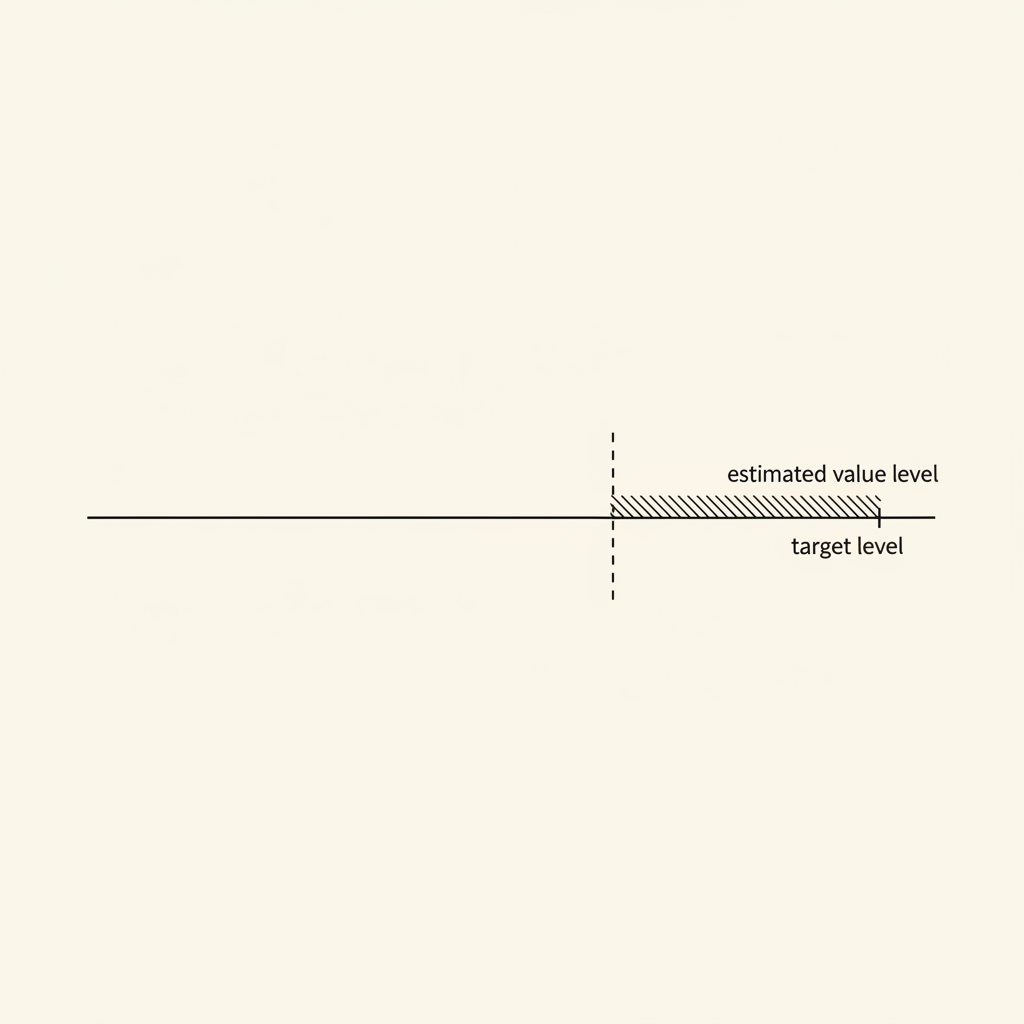
Margin of safety is the gap between your estimated intrinsic value of a share and its current market price, expressed as a percentage of intrinsic value. The idea, central to value investing, is to buy well below your estimate so there is room for error if your assumptions are wrong.
- Formula: (intrinsic value − current price) ÷ intrinsic value × 100.
- A larger positive margin means the price sits further below your value estimate.
- There is no universal "right" number — a more uncertain estimate calls for a bigger buffer.
- The margin is only as reliable as the intrinsic value estimate behind it.
- Margin of safety+30%
- Price discount vs intrinsic value30%
- Price for this target margin$60
- Scenario noteThe current price sits below your intrinsic value estimate in this scenario.
This is an educational scenario, not a buy, sell, or hold recommendation. Re-run it with different intrinsic value estimates to see a realistic range.
Stress-test the result
Change one assumption at a time. The bars show direction, not a forecast.
What it is

Margin of safety is the gap between your estimated intrinsic value of a share and its current market price, expressed as a percentage of intrinsic value. The idea is to leave room for error in your estimate. This calculator measures that gap and, optionally, the price that would correspond to a target margin. It is an educational model, not a price target or recommendation.
Interactive demo: measuring the cushion
Illustrative numbers only — not real data or advice.
Who it is for
- Value-oriented investors who want a buffer between estimate and price.
- Anyone learning how a safety margin is measured against intrinsic value.
- Students and analysts practicing disciplined, assumption-aware valuation.
Inputs and outputs
Inputs
- Intrinsic value per share
- Your own estimate of what one share is fundamentally worth.
- Current market price
- The price the share currently trades at in the market.
- Target margin of safety (optional)
- A buffer you want, used only to derive a corresponding price.
Outputs
- Margin of safety
- How far the price sits below intrinsic value, in percent.
- Price discount vs intrinsic value
- The discount of price relative to your intrinsic value estimate.
- Price for this target margin
- The price that would correspond to your chosen target margin (if provided).
- Scenario note
- A neutral description of where price sits versus estimate — not advice.
Example workflow

- Enter an intrinsic value per share of $100.
- Enter a current market price of $70.
- The margin of safety shows as 30%.
- Optionally set a target margin of safety of 40%.
- Read the price for that target margin ($60) and treat it as one scenario, not a recommendation.
The output depends entirely on your intrinsic value estimate. Test a range of estimates rather than relying on a single number.
Common mistakes
- Treating a large margin as a guarantee instead of a buffer against estimate error.
- Using an over-optimistic intrinsic value that inflates the margin.
- Confusing the margin of safety with an expected return.
- Reading the target price as a recommendation to act rather than a scenario.
- Ignoring how sensitive the margin is to small changes in the intrinsic value input.

Margin of safety is something you verify yourself
In late 1963 the Allied Crude Vegetable Oil scandal exploded: storage tanks pledged as collateral turned out to hold mostly seawater topped with a thin layer of salad oil. American Express, which had guaranteed the warehouse receipts, faced an enormous liability, and its stock was nearly cut in half. The headlines screamed bankruptcy.
Buffett did not read more headlines — he went out to restaurants and banks in Omaha and watched. People were still paying with American Express cards; travelers cheques were still being accepted everywhere. The franchise was intact. He put roughly 40% of his partnership into the stock, and within five years it had risen about five-fold.
A margin of safety comes from facts you check with your own eyes — not from the absence of scary news.

Buying a great franchise on its worst day
By 1976 GEICO had under-priced policies and under-reserved for losses; the insurer was sliding toward insolvency and the stock had collapsed from $61 to about $2. Most investors saw a corpse. Buffett saw that the core advantage — selling insurance direct, at the lowest cost in the industry — was completely intact; the wound was bad management, and management can be replaced.
Berkshire invested roughly $45 million between 1976 and 1980 while a new CEO repaired pricing and reserves. The company recovered, compounded for two decades, and in 1995 Buffett paid $2.3 billion to buy the half of GEICO that Berkshire did not already own.
Ask first whether the problem kills the moat or just the quarter. A fixable wound at a panic price is where safety and return meet.

Buying everything under a dollar as the world went to war
In 1939, as war broke out in Europe and pessimism was total, young John Templeton borrowed $10,000 and placed one order: 100 shares of every NYSE and AMEX stock trading below $1 — 104 companies, 34 of them already in bankruptcy proceedings. He picked nothing; he priced despair across an entire basket.
He held for about four years and roughly quadrupled the money. Only four of the 104 positions went to zero. The systematic rule — maximum pessimism, wide diversification, a fixed holding period — did the work that stock-picking brilliance could not.
At the point of maximum pessimism, breadth and a written rule beat selectivity and nerve.
Related tools
Frequently asked questions
What is margin of safety?
Margin of safety is the difference between your estimated intrinsic value of a share and its market price, shown as a percentage of intrinsic value. It is meant to leave room for error in your own estimate.
How is margin of safety calculated?
One common formula is (intrinsic value − current price) ÷ intrinsic value × 100. A larger positive result means the price sits further below your intrinsic value estimate.
What is a good margin of safety?
There is no single correct number. Some investors look for a larger buffer when their estimate is uncertain. The right margin depends on your assumptions and confidence, not on any universal rule.
What does the target price mean here?
The target price is simply the price that would correspond to a margin of safety you select. It is an illustrative scenario derived from your inputs, not a recommendation to buy or sell.
Why does my margin change so much?
The margin depends entirely on your intrinsic value estimate. Because that estimate is itself sensitive to assumptions, small changes can move the margin significantly, so testing a range is important.
Want valuation tools and stock research in one place?
Download Valuefocus