
Warren Buffett
Chairman of Berkshire Hathaway and the most studied investor alive — the man who turned value investing from a statistical exercise into a philosophy of business ownership.
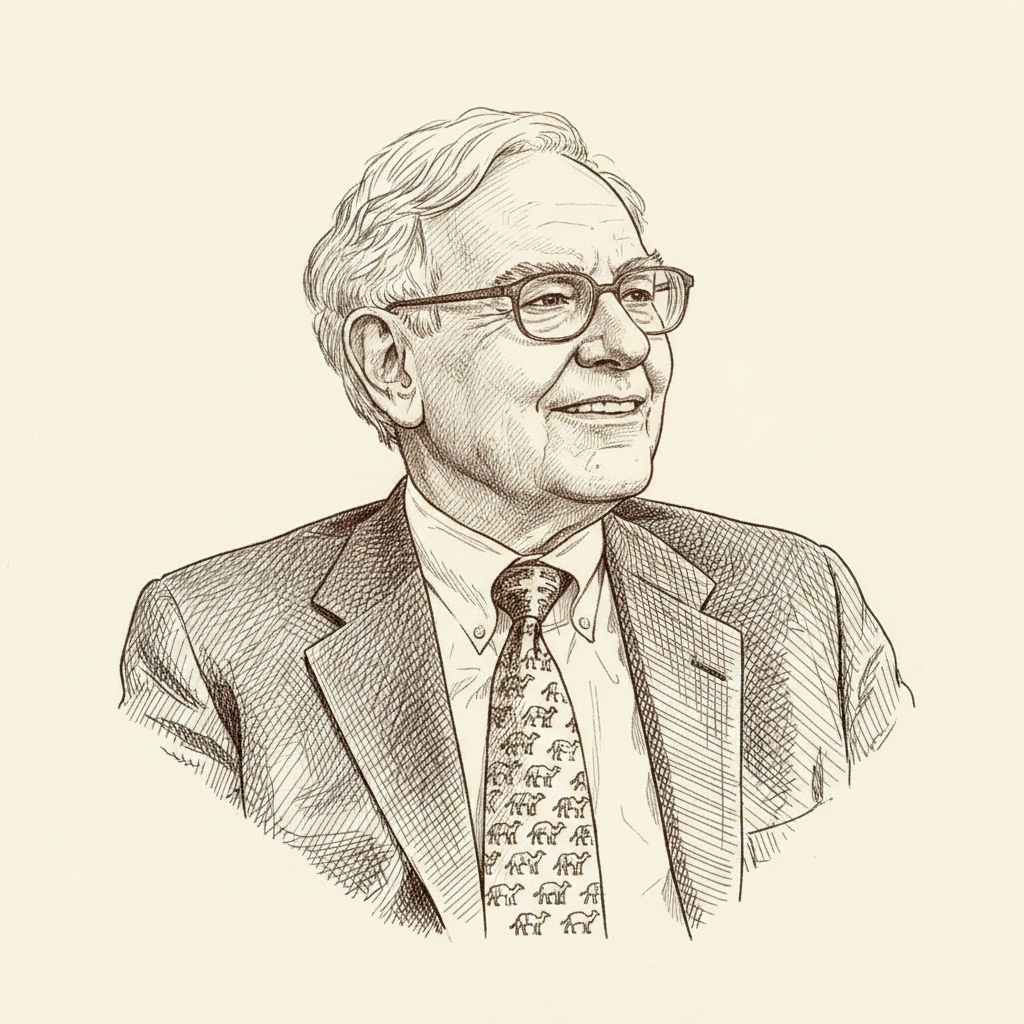
Who he is

Born in Omaha in 1930, Warren Buffett studied under Benjamin Graham at Columbia, ran an investment partnership through the 1950s and 60s, and then built Berkshire Hathaway from a failing textile mill into one of the largest companies in the world. His annual shareholder letters, written since 1965, form perhaps the most accessible business education ever published.
His record spans more than six decades of compounding — achieved not through frenetic trading but through a small number of large, patient decisions.
Core philosophy
Buffett began as a strict Graham disciple, buying statistically cheap "cigar butt" stocks. Under Charlie Munger's influence he made the pivotal shift: "It's far better to buy a wonderful company at a fair price than a fair company at a wonderful price." Quality and durability replaced cheapness as the primary filter.
The pillars: treat stocks as fractional ownership of businesses; stay within your circle of competence; demand a margin of safety; let Mr. Market serve you rather than instruct you; and hold great businesses long enough for compounding to do the heavy lifting.
Key lessons for individual investors
- Temperament beats intellect: the investor's chief problem — and even his worst enemy — is likely to be himself.
- Concentrate on what you understand; a twenty-punch lifetime decision card would make most investors richer.
- Time is the friend of the wonderful business and the enemy of the mediocre one.
- Be fearful when others are greedy and greedy when others are fearful — but only with an independent estimate of value.
- The best holding period for a truly great business is, ideally, forever.
Warren Buffett portfolio — Berkshire Hathaway holdings & stock picks
Berkshire Hathaway's equity portfolio is the most-watched collection of stock picks in the world, disclosed every quarter in 13F filings with the SEC. Its defining trait is concentration: for decades, the top five positions have typically represented 70%+ of the portfolio. Buffett's picks cluster around businesses with durable competitive moats, high returns on capital, and managements he trusts — bought at sensible prices and held for years or decades.
The table below lists some of the most famous Berkshire stock picks and what each one teaches about how Buffett selects businesses. Holdings change over time; always check the latest 13F for current positions.
| Holding | First bought | What the pick teaches |
|---|---|---|
| Apple (AAPL) | 2016 | A consumer franchise disguised as a tech stock — ecosystem lock-in as a moat |
| Coca-Cola (KO) | 1988 | Brand moat + global distribution; never sold through six recessions |
| American Express (AXP) | 1964 / 1991 | Buying a great franchise amid a temporary scandal |
| Bank of America (BAC) | 2011 | Crisis-era preferred deal converted into a core common-stock position |
| Occidental / Chevron | 2019–22 | Energy cash flows priced for pessimism |
| See's Candies (private) | 1972 | The pivot from cheap to quality: paying up for pricing power |
Source: Berkshire Hathaway 13F filings and shareholder letters. Historical facts for education — not a recommendation of any security.
How Buffett picks stocks: the four filters
- A business he can understand — inside his circle of competence.
- Favorable long-term economics — a durable moat and high return on invested capital.
- Able and trustworthy management that allocates capital like owners.
- A sensible price — a margin of safety against an estimate of intrinsic value.
- Then: hold. "Our favorite holding period is forever."
Case deep-dive I: American Express, 1964 — buying through a scandal

In late 1963 the "salad oil scandal" broke: a commodities dealer had used fake soybean-oil inventories as collateral, and an American Express warehousing subsidiary was on the hook for an estimated $150 million. The stock fell from about $65 to under $35, and Wall Street debated whether the company would survive at all.
Buffett did not start with the balance sheet — he started with the customers. He stood behind the cashier at Ross's Steak House in Omaha and watched diners keep paying with the green card; he checked banks and travel agencies to see whether traveler's cheque sales had slowed. They had not. The scandal sat in a subsidiary, while the moat — the brand and payments network — was untouched. He put roughly 40% of the partnership's capital into the stock, his largest position ever to that point, and roughly quintupled the money as the shares recovered over the following five years.
The case became the template for everything later: separate the headline from the economics, measure the damage against the earning power, and when the market confuses a one-time loss with a broken franchise, bet heavily.
| Stage | What he did | Repeatable action |
|---|---|---|
| Signal | A headline crisis halved the stock — but the scandal sat in a subsidiary | In a crash, first ask which layer is wounded: the franchise or a side business |
| Verify | Stood behind restaurant cashiers; checked banks and travel agencies — cards and cheques still in use | Field-check customer behavior instead of reading more headlines |
| Size | Put ≈40% of the partnership into the stock — his largest position ever | When conviction and the price gap are both extreme, the weighting should show it |
| Exit & result | Held ≈5 years to roughly a five-fold recovery | Hold until value is restored, not until the first bounce |
Case deep-dive II: GEICO, 1976 — averaging into a near-bankruptcy

GEICO, the insurer Buffett had idolized since visiting its offices as a 20-year-old student of Graham, had expanded recklessly into bad risks and by 1976 was on the edge of insolvency. The stock had collapsed from $61 to about $2. Regulators circled; most analysts assumed a zero.
Buffett interviewed the incoming CEO, Jack Byrne, for hours, concluded the low-cost direct-selling model was intact beneath the underwriting mess, and began buying — ultimately committing more than $45 million as Byrne cancelled bad policies, exited states, and restored discipline. Berkshire kept buying for two decades and acquired the whole company in 1996. The position multiplied more than fifty-fold from the crisis lows.
The lesson Buffett drew was precise: a great business can survive a bad chapter if the cost advantage survives; what matters is distinguishing a damaged engine from a totaled car — and having the cash and nerve ready when the price reflects the latter.
| Stage | What he did | Repeatable action |
|---|---|---|
| Signal | $61 → $2: the market priced GEICO as a corpse | Distinguish a damaged engine from a totaled car |
| Verify | Hours of interviews with incoming CEO Jack Byrne; confirmed the low-cost direct model intact | For crisis stocks, verify the cost advantage survives and management can be replaced |
| Size | Committed $45M+ across 1976–80 as the repair progressed | Match staged buying to the pace of the turnaround |
| Exit & result | Kept buying for two decades; acquired the whole company in 1996 — 50×+ from the lows | When the thesis keeps delivering, let compounding take over |
Buffett's classic playbook, step by step
- Maintain a standing wish list of durable franchises inside your circle of competence — researched long before any crisis.
- Estimate conservative value from owner earnings over a decade, ignoring next quarter entirely.
- Wait for someone else's emergency: a one-time loss that throws the price into a deep discount.
- Field-verify that the moat is untouched, then size the position by the gap between price and value.
- Hold until the thesis breaks or a clearly better use of capital appears — otherwise do nothing.
Practical takeaways from Buffett's casebook
- Do your own field check: customer behavior tells you faster than headlines whether a moat is breached.
- Size positions by the gap between price and conservative value — his biggest wins were also his biggest weightings.
- A one-time loss against a durable franchise is an opportunity; a structural decline at any price is not.
- Keep cash and a prepared mind: every famous Buffett purchase happened during someone else's emergency.
Track record & famous decisions
| Year / Period | Decision | Outcome |
|---|---|---|
| 1964 | American Express amid the salad-oil panic | ≈40% of the partnership; ≈5× in five years |
| 1972 | See's Candies for $25M | $1.65B+ cumulative pre-tax profit, never sold |
| 1988–89 | Coca-Cola, ≈$1B at ≈15× earnings | ≈$13B within a decade, still held |
| 2009 | BNSF railroad, ≈$44B | dividends have exceeded the purchase price |
| 2016–18 | Apple, ≈$36B | most profitable single investment in Berkshire history |
In their own words
- "Price is what you pay; value is what you get."
- "Be fearful when others are greedy and greedy when others are fearful."
- "Our favorite holding period is forever."
Key facts
Last updated: June 18, 2026- Berkshire Hathaway's equity portfolio is disclosed every quarter in 13F filings with the SEC.
- Its defining trait is concentration: for decades the top five positions have typically represented 70%+ of the portfolio.
- Famous long-held picks include Apple (first bought 2016), Coca-Cola (1988), American Express (1964/1991) and Bank of America (2011).
- Buffett's four filters: a business he understands, durable economics, trustworthy management, and a sensible price.
Valuefocus, "Warren Buffett" (Last updated: June 18, 2026), https://valuefocus.io/masters/warren-buffett
Live track record & latest portfolio
Real figures from public 13F filings and historical returns, via Berkshire Hathaway Inc. For education only — not investment advice, and not a recommendation to copy any position.
Annual return history
Yearly returns (%) as reported by GuruFocus. Past performance does not predict future results.
Source: GuruFocus. Figures are delayed and may be revised.
Ask Warren Buffett a question
Type a question about Warren Buffett's classic investment theories, or pick one below.

A fair price for a wonderful business
In 1988, just months after the Black Monday crash, Warren Buffett quietly began buying Coca-Cola shares. By 1989 Berkshire had spent roughly $1 billion — at about 15 times earnings, hardly a statistical bargain. Wall Street was puzzled: the "cigar-butt" student of Graham was paying up for a household brand.
Buffett was not valuing the next quarter. He was estimating decades of predictable owner earnings from a product sold in nearly every country on earth, protected by the strongest brand moat in consumer goods. Ten years later the stake was worth more than $13 billion, and Berkshire still holds it today — the annual dividends alone now return a large share of the original cost every single year.
A valuation model exists to estimate long-term cash generation — not to find the statistically cheapest ticker on the screen.
Margin of safety is something you verify yourself
In late 1963 the Allied Crude Vegetable Oil scandal exploded: storage tanks pledged as collateral turned out to hold mostly seawater topped with a thin layer of salad oil. American Express, which had guaranteed the warehouse receipts, faced an enormous liability, and its stock was nearly cut in half. The headlines screamed bankruptcy.
Buffett did not read more headlines — he went out to restaurants and banks in Omaha and watched. People were still paying with American Express cards; travelers cheques were still being accepted everywhere. The franchise was intact. He put roughly 40% of his partnership into the stock, and within five years it had risen about five-fold.
A margin of safety comes from facts you check with your own eyes — not from the absence of scary news.
A valuation done with an annual report and a weekend
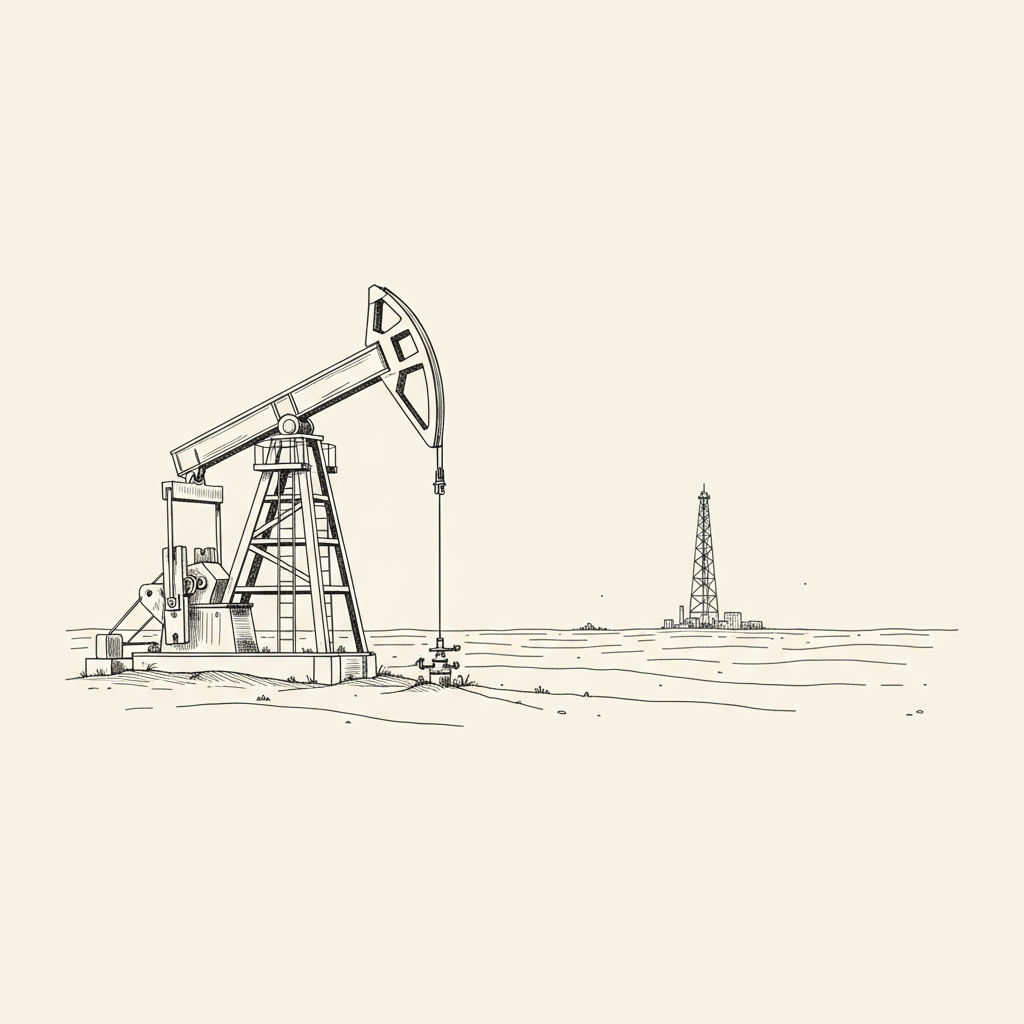
Buffett read PetroChina's annual report at home and pegged the company's value at roughly $100 billion. The market was pricing it near $37 billion. He built no spreadsheet, met no management, sought no second opinion — the gap was too wide to need precision. Berkshire bought about $488 million of the Hong Kong-listed shares.
By 2007, rising oil prices and a re-rating had carried PetroChina's market value past $250 billion. Buffett sold the entire stake for about $4 billion — roughly an eight-fold return plus dividends — and moved on.
When value is triple the price, ordinary accuracy is enough. The best decisions rarely require the most elaborate models.
The best investor's worst investment
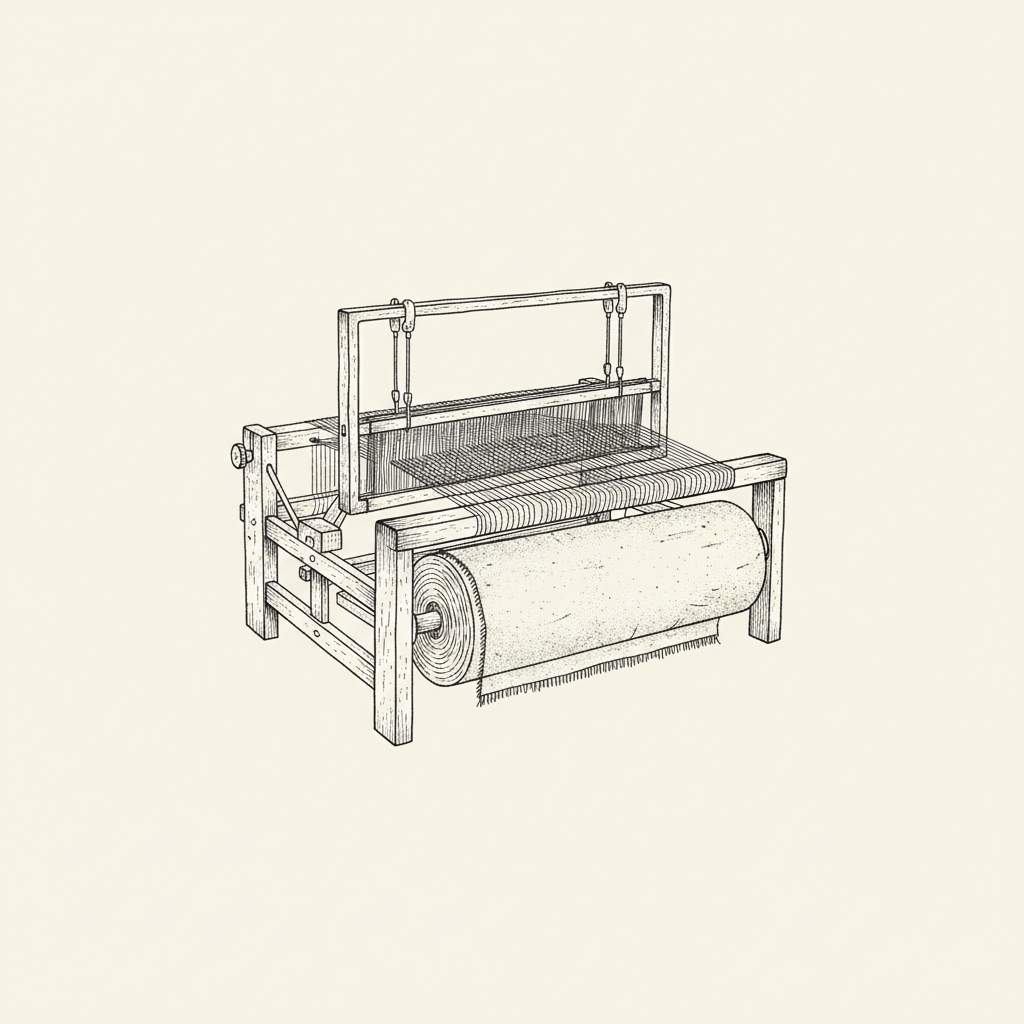
Berkshire Hathaway was a fading New England textile mill that Buffett bought into in the early 1960s because it was statistically cheap — and took control of in 1965 partly out of spite, after its CEO shaved an eighth of a dollar off a promised tender offer. For the next twenty years Buffett fed capital into newer looms while foreign competition ground prices ever lower.
No amount of good management could fix a commodity product with no moat. He finally closed the mills in 1985 and later called Berkshire "the dumbest stock I ever bought", estimating that the compounding forgone by not starting from an insurance company instead cost about $200 billion.
A low price cannot rescue a business with no moat. Knowing which problems are unfixable is what a circle of competence is for.
Related tools
Frequently asked questions
What is Buffett's most important idea?
Arguably the reframing of stocks as businesses. Once you evaluate a share the way you would evaluate buying the whole company, most speculative behavior stops making sense.
Where should a beginner start studying Buffett?
The Berkshire Hathaway shareholder letters, freely available, read in chronological order. They cover valuation, moats, accounting, and temperament in plain language.
Study businesses with Buffett-inspired research discipline:
Download Valuefocus