
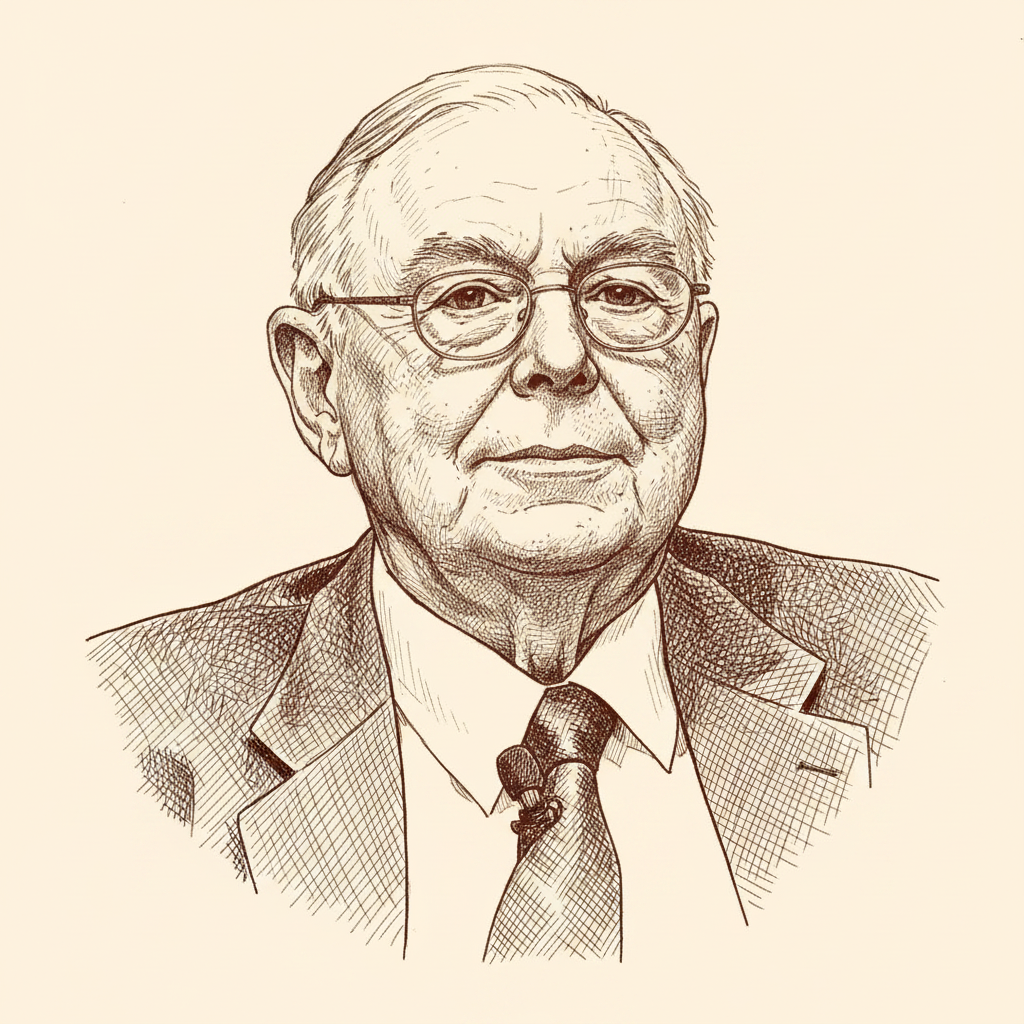
Charlie Munger
Vice Chairman of Berkshire Hathaway (1924–2023) — the polymath who pushed value investing beyond cheapness, and built a philosophy around multidisciplinary thinking.
Who he was

A lawyer by training, Charlie Munger ran his own partnership before joining forces with Warren Buffett, serving as Berkshire Hathaway's Vice Chairman for nearly five decades. His influence redirected Berkshire from buying cheap mediocrity toward buying excellent businesses — the single most consequential strategic shift in the company's history.
Beyond investing, his "Poor Charlie's Almanack" and university talks made him a teacher of decision-making itself, drawing on psychology, mathematics, biology, and history.
Core philosophy
Munger's signature idea is the latticework of mental models: real understanding comes from mastering the big ideas of many disciplines and using them in combination. A valuation is only as good as the psychology, incentives, and base rates surrounding it.
His second signature is inversion: "All I want to know is where I'm going to die, so I'll never go there." Instead of asking how to succeed, ask what guarantees failure — leverage, envy, dishonesty, operating outside your circle — and systematically avoid it.
Key lessons for individual investors
- A great business at a fair price is superior to a fair business at a great price.
- Invert, always invert: avoiding stupidity is easier and more reliable than seeking brilliance.
- The big money is not in the buying and selling, but in the waiting.
- Know the edge of your competency; the most dangerous ideas are the ones you only half understand.
- Incentives are superpowers: never evaluate a management, a deal, or your own reasoning without asking who is being paid to believe what.
Charlie Munger stocks — portfolio & investing principles
Munger's personal approach to portfolio construction was even more extreme than Buffett's: a handful of positions, held for decades, sized with conviction. As chairman of Daily Journal Corporation he ran one of the most concentrated public portfolios in America — at times just four or five stocks. He argued that wide diversification is "for people who don't know what they're doing," while a few great businesses, deeply understood, are easier to monitor and harder to overpay for.
The stocks most associated with Munger illustrate his core test: a quality business at a fair price, bought within his circle of competence and held through volatility.
| Stock | Vehicle / period | Why it fit Munger's principles |
|---|---|---|
| BYD | Berkshire, 2008– | Betting on an extraordinary founder (Wang Chuanfu) at an early stage — via Li Lu |
| Costco (COST) | Personal & board seat, 1997– | A rare moat built on giving value back to customers; he called it a "perfect" business |
| Wells Fargo / Bank of America | Daily Journal, 2009 | Deploying idle cash into bank stocks at the bottom of the financial crisis |
| Alibaba (BABA) | Daily Journal, 2021–22 | A rare misstep he openly acknowledged and reduced — intellectual honesty in action |
Source: Daily Journal 13F filings, Berkshire disclosures, and shareholder meeting transcripts. Educational facts, not recommendations.
Munger's portfolio principles
- Extreme concentration: a few outstanding businesses beat a long list of mediocre ones.
- Sit on your hands: "The big money is not in the buying and selling, but in the waiting."
- Invert: before buying, work out all the ways the investment could fail.
- Avoid stupidity rather than seek brilliance — skip anything outside your competence.
- Take a simple idea and take it seriously; let compounding do the heavy lifting.
Case deep-dive I: BYD, 2008 — paying up for an engineer

In 2008 Li Lu brought Munger an obscure Chinese battery-and-car maker. Munger, then 84, was unmoved by the financials and transfixed by the founder: Wang Chuanfu, he said, was "a combination of Thomas Edison and Jack Welch — solving technical problems like Edison and getting things done like Welch". Berkshire invested $232 million for roughly 10% of the company.
The stock did nothing impressive for years — at points it fell more than 80% from interim highs — and critics called it Munger's folly. He never trimmed. By the 2022 electric-vehicle boom the position was worth roughly $9 billion, an approximately 40-fold gain, and BYD had become the world's largest EV maker by volume.
The case shows Munger's most distinctive edge: judging extraordinary people and engineering cultures qualitatively, then letting a decade of compounding do what no spreadsheet could.
| Stage | What he did | Repeatable action |
|---|---|---|
| Signal | Li Lu's recommendation — outside Omaha's circle, but from a trusted source with a real edge | Extend your circle of competence through someone who genuinely has one where you do not |
| Verify | Judged the founder himself: engineering depth plus execution ("Edison + Welch") | Treat the qualitative judgment of people as formal research, not decoration |
| Size | $232M for ≈10% — meaningful, but survivable if wrong | Bets outside your native circle should be weighty, never fatal |
| Exit & result | Held through an 80% drawdown; ≈40× over 14 years before trimming | If the qualitative thesis is intact, price swings are not a sell reason |
Case deep-dive II: Daily Journal, 2009 — acting at the bottom

As chairman of the tiny Daily Journal Corporation, Munger had let its surplus cash sit in treasuries for years while others demanded he "do something". In February–March 2009, with bank stocks priced for systemic collapse, he deployed roughly $20 million of that cash into Wells Fargo and US Bancorp near the exact bottom of the crisis.
The stake multiplied several-fold within a few years and became a textbook in two acts: the patience to hold cash through a long bull market while looking inactive, and the decisiveness to commit nearly all of it within weeks once prices crossed the threshold of absurdity.
"It takes character," he said of the episode, "to sit with all that cash and do nothing. I didn't get to the top by going after mediocre opportunities."
| Stage | What he did | Repeatable action |
|---|---|---|
| Signal | Early 2009: bank stocks priced for systemic collapse | Wait for prices to cross the threshold of absurdity |
| Verify | Chose only the lowest-cost deposit franchises — Wells Fargo, US Bancorp | Even in a panic, buy only the highest-quality names available |
| Size | Deployed nearly all of ≈$20M of patiently hoarded cash within weeks | When the rare moment arrives, half measures waste the conviction |
| Exit & result | Several-fold gain in a few years; held long after | Quality bought at the bottom needs only time |
Munger's classic playbook, step by step
- Hunt only for "a great business run by exceptional people" — a bar so high most years yield nothing.
- Run every idea through multiple mental models, and invert: list the ways it dies before the ways it wins.
- Hold cash as a normal state, accepting years of looking inactive.
- When price crosses into absurdity, commit heavily within weeks, not quarters.
- Hold for decades and let compounding and deferred taxes do the heavy lifting.
Practical takeaways from Munger's casebook
- Quality of people is analyzable — treat judgment of management as research, not decoration.
- A few great decisions per decade beat constant activity; keep the bar absurdly high.
- Holding cash is a position; its payoff arrives all at once in a panic.
- Once conviction is reached, partial measures waste it — commit meaningfully.
Track record & famous decisions
| Year / Period | Decision | Outcome |
|---|---|---|
| 1962–75 | Munger investment partnership | ≈19.8%/yr vs ≈5% for the Dow |
| 1972 | Pushed Buffett to pay up for See's Candies | rewired Berkshire toward quality |
| 2008 | BYD via Li Lu — $232M for ≈10% | ≈40× at the 2022 peak |
| 2009 | Daily Journal cash deployed into bank stocks | bought at the bottom of the crisis |
In their own words
- "Invert, always invert."
- "The big money is not in the buying and selling, but in the waiting."
- "Take a simple idea and take it seriously."
Key facts
Last updated: June 18, 2026- As chairman of Daily Journal Corporation, Munger ran one of the most concentrated public portfolios in America — at times just four or five stocks.
- Stocks most associated with him include BYD (Berkshire, 2008–), Costco (personal & board seat, 1997–) and crisis-era bank stocks.
- He argued wide diversification is "for people who don't know what they're doing."
- His Alibaba position (Daily Journal, 2021–22) is a rare misstep he openly acknowledged and reduced.
Valuefocus, "Charlie Munger" (Last updated: June 18, 2026), https://valuefocus.io/masters/charlie-munger
Ask Charlie Munger a question
Type a question about Charlie Munger's classic investment theories, or pick one below.
The $25 million lesson that changed Buffett
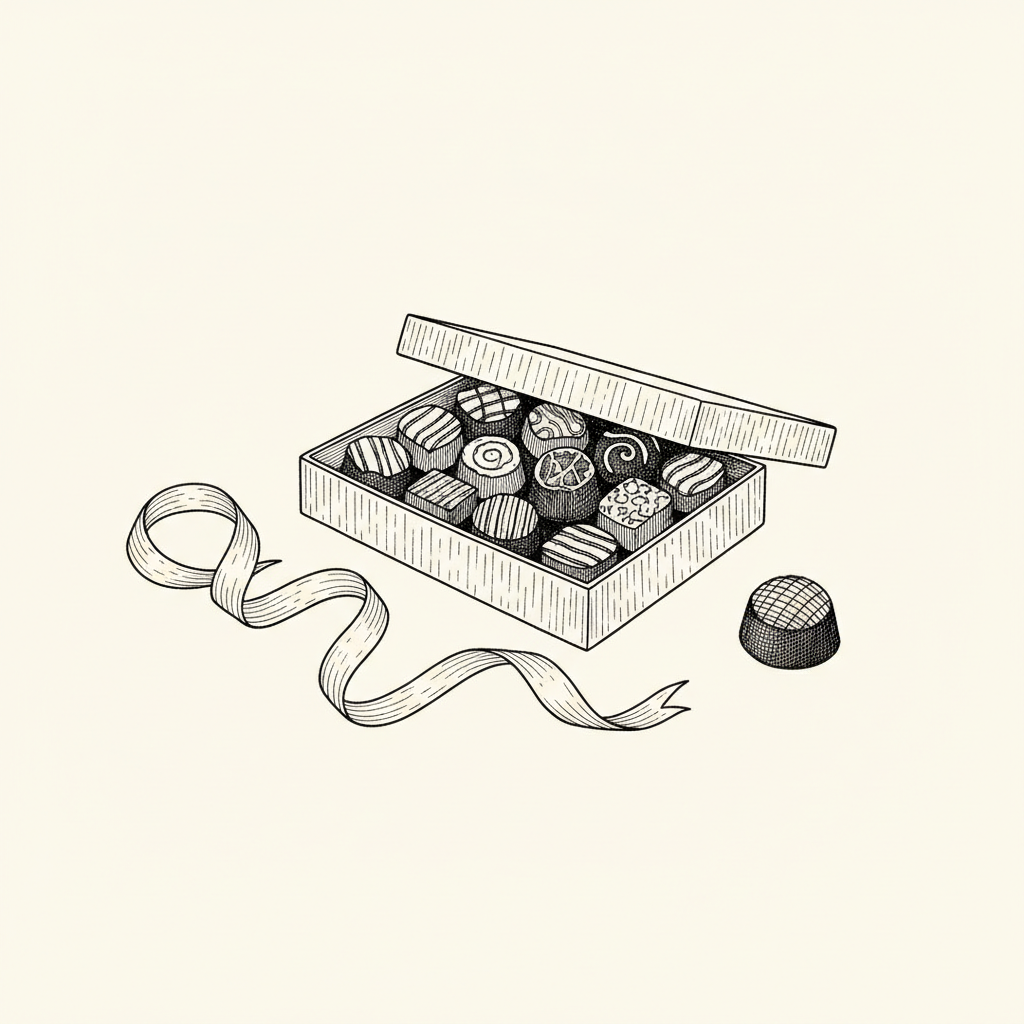
In 1972 the sellers of See's Candies asked $30 million; Buffett, trained on Graham's cigar butts, refused to go above $25 million — roughly three times book value, a price the old Buffett would never pay. The deal nearly died over $5 million. Charlie Munger pushed back: a beloved brand with loyal customers and genuine pricing power deserved a premium.
They paid the $25 million. See's went on to ship more than $1.65 billion of cumulative pre-tax earnings back to Omaha while needing almost no additional capital — raising prices every year without losing a single loyal customer. Buffett later called it 'the prototype of a dream business' and credits this one purchase with rewiring how he invests.
Quality compounds quietly for decades. Temperament and a clear circle of competence beat chasing the cheapest price.
The only deal Munger ever pushed
In the depths of the 2008 crisis, Munger did something he had never done before: he actively lobbied Buffett to invest in BYD, a Chinese battery and car maker led by engineer Wang Chuanfu — a man Munger described as "a combination of Thomas Edison and Jack Welch". The conviction came through Li Lu, whose circle of competence covered what Omaha's did not.
Berkshire paid $232 million for about 10% of the company — a tiny position by its standards, in an industry Buffett had publicly sworn off. At its 2022 peak the stake was worth roughly $9 billion, close to a forty-fold gain, before Berkshire began trimming.
A circle of competence can be extended honestly — by trusting someone who genuinely has one where you do not.

A fair price for a wonderful business
In 1988, just months after the Black Monday crash, Warren Buffett quietly began buying Coca-Cola shares. By 1989 Berkshire had spent roughly $1 billion — at about 15 times earnings, hardly a statistical bargain. Wall Street was puzzled: the "cigar-butt" student of Graham was paying up for a household brand.
Buffett was not valuing the next quarter. He was estimating decades of predictable owner earnings from a product sold in nearly every country on earth, protected by the strongest brand moat in consumer goods. Ten years later the stake was worth more than $13 billion, and Berkshire still holds it today — the annual dividends alone now return a large share of the original cost every single year.
A valuation model exists to estimate long-term cash generation — not to find the statistically cheapest ticker on the screen.
Related tools
Frequently asked questions
What are mental models in Munger's sense?
The core ideas of major disciplines — compound interest, opportunity cost, incentive bias, margin of safety, natural selection — used together as a checklist for judgment rather than in isolation.
How did Munger change Buffett's investing?
He pushed Buffett away from Graham-style statistical bargains toward durable, high-return businesses worth holding for decades — the approach behind Berkshire's largest successes.
Apply multidisciplinary research discipline to your own watchlist:
Download Valuefocus