
Buffett Margin of Safety — How Much Is Enough?
Graham called it the three most important words in investing. Here is how Buffett applies the margin of safety — and how big a discount different businesses deserve.

What Buffett means by margin of safety

The margin of safety is the gap between your estimate of intrinsic value and the price you pay: MOS = 1 − Price ÷ Intrinsic Value. Buffett's bridge analogy: "When you build a bridge, you insist it can carry 30,000 pounds, but you only drive 10,000-pound trucks across it."
Buffett's twist on Graham: the size of the required discount depends on the certainty of the business. A predictable franchise needs less of a discount than a cyclical or a turnaround — certainty itself is a form of safety.
How much is enough? A practical framework
| Business type | Typical discount sought | Why |
|---|---|---|
| Dominant consumer franchise (e.g. Coca-Cola type) | ≈10–25% | Cash flows are highly predictable; certainty substitutes for discount |
| Good business, average predictability | ≈25–40% | Forecast error is real; the discount absorbs it |
| Cyclical / commodity business | ≈40–50% | Earnings can halve through a cycle |
| Turnaround / leveraged situation | 50%+ or pass | Buffett: "Turnarounds seldom turn" |
These bands summarize how value investors commonly describe the practice — they are heuristics, not rules Buffett has published as a table.
Principles behind the number
- The margin protects against your own errors first, the market second.
- A bigger discount cannot rescue a bad business — quality comes before price.
- If you need a spreadsheet's second decimal to justify the purchase, there is no margin.
- Stay within your circle of competence: the margin you can't see is the one that hurts you.
- Patience is the mechanism: wait for the "fat pitch" instead of shrinking your standards.

The $25 million lesson that changed Buffett
In 1972 the sellers of See's Candies asked $30 million; Buffett, trained on Graham's cigar butts, refused to go above $25 million — roughly three times book value, a price the old Buffett would never pay. The deal nearly died over $5 million. Charlie Munger pushed back: a beloved brand with loyal customers and genuine pricing power deserved a premium.
They paid the $25 million. See's went on to ship more than $1.65 billion of cumulative pre-tax earnings back to Omaha while needing almost no additional capital — raising prices every year without losing a single loyal customer. Buffett later called it 'the prototype of a dream business' and credits this one purchase with rewiring how he invests.
Quality compounds quietly for decades. Temperament and a clear circle of competence beat chasing the cheapest price.
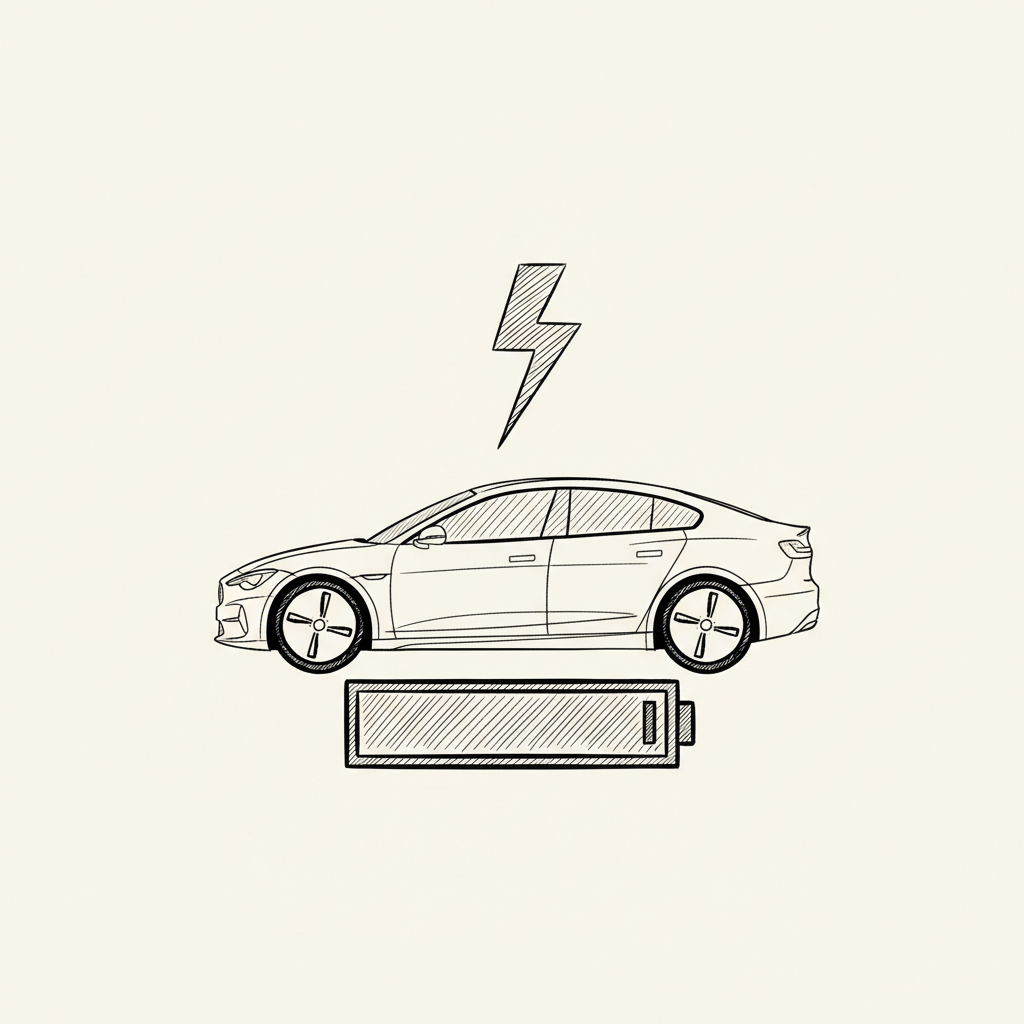
The only deal Munger ever pushed
In the depths of the 2008 crisis, Munger did something he had never done before: he actively lobbied Buffett to invest in BYD, a Chinese battery and car maker led by engineer Wang Chuanfu — a man Munger described as "a combination of Thomas Edison and Jack Welch". The conviction came through Li Lu, whose circle of competence covered what Omaha's did not.
Berkshire paid $232 million for about 10% of the company — a tiny position by its standards, in an industry Buffett had publicly sworn off. At its 2022 peak the stake was worth roughly $9 billion, close to a forty-fold gain, before Berkshire began trimming.
A circle of competence can be extended honestly — by trusting someone who genuinely has one where you do not.
Related tools
Frequently asked questions
Did Buffett invent the margin of safety?
No — Benjamin Graham did, in The Intelligent Investor (chapter 20). Buffett adapted it: for higher-quality, more predictable businesses he accepts a smaller discount.
Is a 50% margin of safety always better?
A wider discount is safer if your value estimate is sound, but demanding 50% on everything means missing great businesses that rarely get that cheap. Match the discount to the predictability of the business.
How do I estimate intrinsic value first?
Common approaches include DCF on owner earnings or free cash flow. Try our DCF and Intrinsic Value calculators, then apply your margin on top.
Valuefocus shows the gap between price and value at a glance, so you always know your margin of safety.
Download Valuefocus