
Seth Klarman
Founder of the Baupost Group and author of the famously out-of-print "Margin of Safety" — the most rigorous modern voice for risk-first, absolute-return value investing.
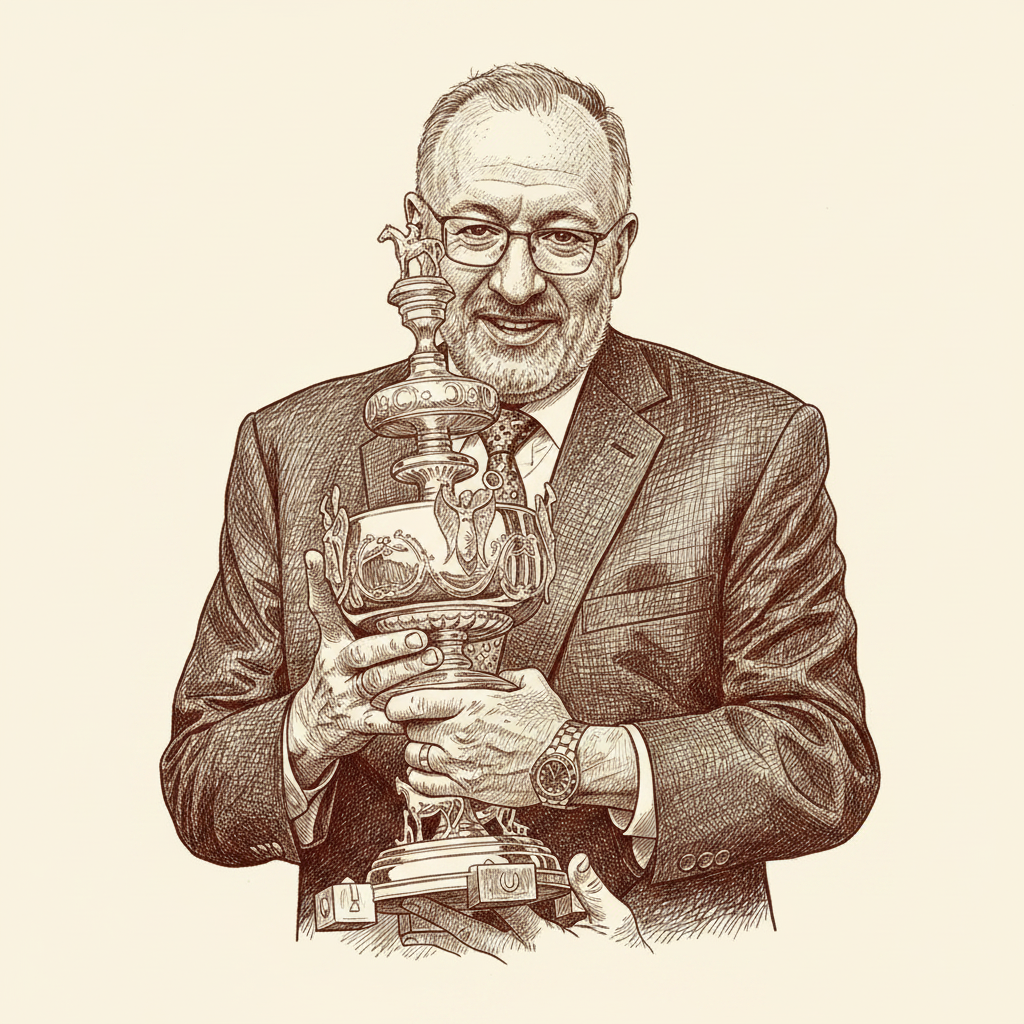
Who he is

Seth Klarman founded the Baupost Group in 1982 and built it into one of the largest hedge funds in the world while taking famously little risk: long stretches holding substantial cash, no leverage, and a willingness to look wrong for years. His 1991 book "Margin of Safety" sold modestly, went out of print, and became a cult object trading for thousands of dollars a copy.
Klarman extends the Graham tradition into modern, often complex situations — distressed debt, spin-offs, liquidations — while keeping the philosophy stubbornly simple.
Core philosophy
Klarman's starting point is loss avoidance: the first goal is not to make money but to avoid permanent capital loss, because the mathematics of compounding punish large drawdowns brutally. Returns are the byproduct of consistently not losing.
From this follow his distinctive traits: value is a range, not a number; cash is a legitimate position when nothing meets your standard; and the willingness to underperform a euphoric market is the price of admission for surviving its aftermath. "The trick of successful investors is to sell when they want to, not when they have to."
Key lessons for individual investors
- Avoiding loss should be the primary goal — not because losses are unpleasant, but because compounding cannot recover from them efficiently.
- If you do not know the value of an asset with reasonable confidence, no price makes it a bargain.
- Holding cash when opportunities are absent is a decision, and often the correct one.
- Most investors' edge is not information but behavior: patience, discipline, and tolerance for looking wrong.
- Risk is not volatility — it is the probability and size of permanent loss.
Case deep-dive I: Enron bankruptcy claims, 2002 — value in the wreckage

After Enron's collapse — the most despised corporate name in America — Baupost waded into the bankruptcy and bought creditor claims at deep discounts, at times around 10–15 cents on the dollar. The work was brutal: untangling thousands of intercompany obligations across hundreds of entities to estimate what the estate would eventually recover.
Sentiment had priced the claims; the documents priced them differently. As the estate liquidated assets and settlements accumulated over the following years, recoveries came in far above those panic prices, making the trade one of Baupost's signature wins.
Klarman's summary of the genre: the seller's motivation is your margin. Holders dumped Enron paper because owning it was embarrassing and mandates forbade it — reasons that had nothing to do with what the claims were worth.
| Stage | What he did | Repeatable action |
|---|---|---|
| Signal | Holders dumped Enron claims for shame and mandate reasons — not economics | Always ask first: why is the seller selling? |
| Verify | Untangled thousands of intercompany claims to estimate the estate recovery | Hard documents are a moat — the difficulty itself thins the competition |
| Size | Bought claims in stages at ≈10–15 cents on the dollar | Let the depth of the discount serve as the margin of safety |
| Exit & result | Recoveries arrived via liquidations and settlements, far above panic prices | Exit on the recovery timetable, not on market mood |
Case deep-dive II: 2008–09 — the payoff of years of patience

Through the mid-2000s Baupost held a quarter or more of its assets in cash, absorbing criticism that it was leaving returns on the table while markets melted up. Klarman's answer was that cash is a call option on future bargains — its value appears precisely when no one else has any.
When Lehman failed, Baupost became one of the few buyers answering the phone, deploying billions into distressed debt, busted securitizations and forced-sale corporate bonds at prices implying catastrophe. The following two years were among the best in the firm's history.
The deeper lesson he drew was about clients as much as securities: Baupost had spent years cultivating investors who would not redeem in a panic — because the best analysis is worthless if your capital flees at the bottom.
| Stage | What he did | Repeatable action |
|---|---|---|
| Signal | Pre-crisis: capital everywhere, covenants dissolving | Risk accumulates in booms and is realized in panics |
| Verify | Held 25%+ cash for years with a pre-researched wish list | Preparation = capital + criteria + a named list, all three |
| Size | Deployed billions into distressed debt after Lehman | Be the buyer of last resort when forced selling peaks |
| Exit & result | Monetized as credit normalized — among the firm's best years | Make sure your capital structure lets you reach the finish line |
Klarman's classic playbook, step by step
- Hunt where selling is forced or non-economic: bankruptcies, index deletions, mandate-driven dumps.
- Interrogate the seller's motive before the asset's numbers.
- Value bottom-up to liquidation or recovery value from the primary documents.
- Let discount plus structure provide the safety margin; treat cash as an option on the next dislocation.
- Exit along the realization path — and keep your own funding structure panic-proof.
Practical takeaways from Klarman's casebook
- Ask why the seller is selling: forced, non-economic selling is the most reliable source of bargains.
- Cash is not idle — it is an option on the next dislocation, and it pays off all at once.
- Complexity deters competition: the harder the documents, the fewer the bidders.
- Structure your own finances so you are never the forced seller.
Track record & famous decisions
| Year / Period | Decision | Outcome |
|---|---|---|
| 1982 | Co-founded Baupost Group at age 25 | decades of ≈20%/yr with minimal leverage |
| 1991 | Margin of Safety published | out of print; copies trade for thousands |
| 2008–09 | Deployed billions into distressed debt | the fund's finest stretch, prepared years ahead |
In their own words
- "Value investing is at its core the marriage of a contrarian streak and a calculator."
- "The avoidance of loss is the surest way to ensure a profitable outcome."
- "Risk is not the same as volatility; risk is the probability of permanent capital loss."
Live track record & latest portfolio
Real figures from public 13F filings and historical returns, via The Baupost Group. For education only — not investment advice, and not a recommendation to copy any position.
Annual return history
Yearly returns (%) as reported by GuruFocus. Past performance does not predict future results.
Source: GuruFocus. Figures are delayed and may be revised.
Ask Seth Klarman a question
Type a question about Seth Klarman's classic investment theories, or pick one below.
The buyer of last resort
Through the mid-2000s Baupost was mocked for sitting on enormous cash reserves — at times 40–50% of the fund — while markets melted upward. Klarman's answer never changed: cash is not idleness, it is an option on other people's future panic.
When Lehman collapsed in late 2008 and forced sellers flooded every market, Baupost was one of the few buyers with both liquidity and a pre-researched wish list. Klarman deployed billions into bonds and distressed claims at prices that assumed the world was ending. It was the fund's finest stretch — earned years earlier, when holding cash looked foolish.
Risk management is not a brake on returns. Done early, it is the source of them.

Buying everything under a dollar as the world went to war
In 1939, as war broke out in Europe and pessimism was total, young John Templeton borrowed $10,000 and placed one order: 100 shares of every NYSE and AMEX stock trading below $1 — 104 companies, 34 of them already in bankruptcy proceedings. He picked nothing; he priced despair across an entire basket.
He held for about four years and roughly quadrupled the money. Only four of the 104 positions went to zero. The systematic rule — maximum pessimism, wide diversification, a fixed holding period — did the work that stock-picking brilliance could not.
At the point of maximum pessimism, breadth and a written rule beat selectivity and nerve.

Margin of safety is something you verify yourself
In late 1963 the Allied Crude Vegetable Oil scandal exploded: storage tanks pledged as collateral turned out to hold mostly seawater topped with a thin layer of salad oil. American Express, which had guaranteed the warehouse receipts, faced an enormous liability, and its stock was nearly cut in half. The headlines screamed bankruptcy.
Buffett did not read more headlines — he went out to restaurants and banks in Omaha and watched. People were still paying with American Express cards; travelers cheques were still being accepted everywhere. The franchise was intact. He put roughly 40% of his partnership into the stock, and within five years it had risen about five-fold.
A margin of safety comes from facts you check with your own eyes — not from the absence of scary news.
Related tools
Frequently asked questions
Why is "Margin of Safety" so famous?
It is the most complete modern statement of risk-first value investing, long out of print. The core ideas — value ranges, loss avoidance, institutional constraints as opportunity — are summarized in his shareholder letters and interviews.
How does Klarman differ from Buffett?
Buffett gravitates toward great businesses held forever; Klarman is more situational — distressed assets, complex securities, special situations — united by the same insistence on a discount to conservative value.
Make risk-first analysis part of your research routine:
Download Valuefocus