
Howard Marks
Co-founder of Oaktree Capital Management and author of the memos Warren Buffett says he opens first — the field's clearest writer on risk, cycles, and second-level thinking.
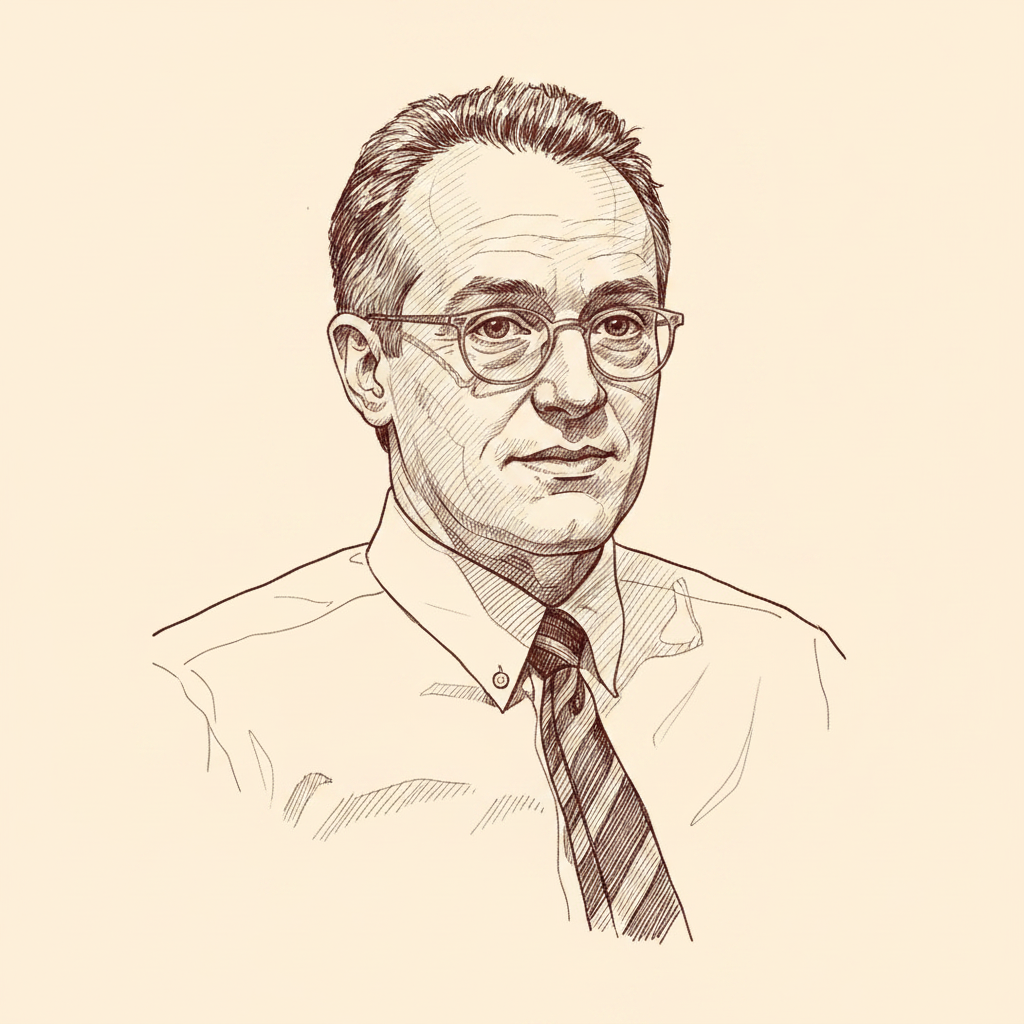
Who he is

Howard Marks co-founded Oaktree Capital Management in 1995, building it into a leading distressed-debt and credit investor. His client memos, written since 1990 and freely published, plus his books "The Most Important Thing" and "Mastering the Market Cycle", have made him one of investing's most influential teachers.
His specialty is the unglamorous side of investing: what can go wrong, what the crowd is assuming, and where we stand in the cycle.
Core philosophy
Marks's central tool is second-level thinking. First-level: "It's a good company, buy it." Second-level: "It's a good company — but everyone thinks so, so it's priced beyond perfection; sell." Since the consensus is already in the price, above-average results require thinking that is both different from the crowd and correct.
His second pillar is the pendulum: markets swing perpetually between euphoria and depression, rarely pausing at "fair". You cannot predict the swing's timing, but you can measure where the pendulum currently hangs — and calibrate aggressiveness accordingly. "You can't predict. You can prepare."
Key lessons for individual investors
- The most important question about any investment is not "how much can I make?" but "how much can I lose, and how likely is it?"
- Risk is highest precisely when it is perceived to be lowest — danger hides in popularity.
- Being too far ahead of your time is indistinguishable from being wrong; great investing requires surviving the interim.
- Knowing where you stand in the cycle beats forecasting where the cycle goes next.
- Experience is what you got when you didn't get what you wanted.
Case deep-dive I: 2008 — buying $500 million a week after Lehman

Oaktree did not improvise its crisis response — it pre-funded it. Sensing late-cycle excess in 2007, Marks and Bruce Karsh raised a record ≈$10.9 billion reserve fund and let it sit, drawing criticism as markets kept rising. The thesis was not a prediction of when, only an observation of how much risk others were taking.
When Lehman failed in September 2008, the playbook activated: Oaktree invested roughly half a billion dollars per week for fifteen consecutive weeks into senior loans and bonds of fundamentally sound companies being dumped by forced sellers. There was no bottom-calling — Marks wrote at the time that "we may be early, but we refuse to be late". The fund went on to produce exceptional returns as credit normalized.
The episode embodies his core teaching: you cannot predict, you can prepare — and preparation means having capital, criteria, and the stomach ready before the panic, not during it.
| Stage | What he did | Repeatable action |
|---|---|---|
| Signal | 2007: observed how much risk others were taking — not when it would break | Measure the temperature of the cycle, never the timing of the turn |
| Verify | Raised a ≈$10.9B reserve fund and wrote the deployment rules in advance | Pre-commit: capital raised and rules written before the storm |
| Size | ≈$500M per week for 15 straight weeks after Lehman | Refuse to call bottoms; scale in steadily while the discount is wide |
| Exit & result | Exceptional returns as credit normalized | "We may be early, but we refuse to be late" |
Case deep-dive II: 2001–02 telecom distress — second-level thinking in practice

After the dot-com bust, the bonds of overleveraged telecom and cable companies collapsed indiscriminately. First-level thinking said "the industry is dying". Second-level thinking, as Marks framed it, asked: which of these companies have assets — networks, spectrum, subscribers — worth more than the senior debt even in liquidation?
Oaktree bought selected distressed paper at prices implying near-total loss, and recovered handsomely as restructurings converted bonds into ownership of viable businesses. The errors of the boom became the raw material of the recovery.
Marks's memos from the period repeat the asymmetry: when the price already assumes disaster, modest good news is enough — "it's not what you buy, it's what you pay".
| Stage | What he did | Repeatable action |
|---|---|---|
| Signal | Telecom bonds dumped indiscriminately after the dot-com bust | Indiscriminate selling is the hunting ground of second-level thinking |
| Verify | Liquidation test: networks, spectrum and subscribers vs the senior debt | First ask what the price already assumes, then what the assets are worth |
| Size | Bought selected paper priced for near-total loss | Let "disaster already in the price" supply the asymmetry |
| Exit & result | Restructurings converted bonds into ownership of viable businesses | Exit along the restructuring path, not the market bounce |
Marks's classic playbook, step by step
- Continuously gauge the cycle by how much risk others are taking and how loose terms have become.
- Raise capital and write deployment rules before the crisis, then wait — visibly idle if necessary.
- Apply second-level thinking: hunt where prices already assume disaster.
- Never call the bottom; deploy steadily through the panic at a pre-set pace.
- Realize gains along the normalization or restructuring path.
Practical takeaways from Marks's casebook
- Position by the temperature of the cycle: aggressive when others are fearful, cautious when capital is everywhere.
- Pre-commit your crisis plan — capital raised and rules written before the storm.
- Second-level thinking asks what is already in the price, not what the future holds.
- Refuse to call bottoms; scale in while the discount is wide.
Track record & famous decisions
| Year / Period | Decision | Outcome |
|---|---|---|
| 1990– | The memos from Howard Marks | "When I see memos from Howard Marks in my mail, they're the first thing I open" — Buffett |
| 1995 | Co-founded Oaktree Capital | became the world's largest distressed-debt investor |
| 2007–08 | Raised a record ≈$10.9B reserve fund | invested ≈$500M/week in the 15 weeks after Lehman |
| 2011 | The Most Important Thing published | the modern classic on risk and cycles |
In their own words
- "You can't predict. You can prepare."
- "The most dangerous thing is to believe there is no risk."
- "Being too far ahead of your time is indistinguishable from being wrong."
Live track record & latest portfolio
Real figures from public 13F filings and historical returns, via Oaktree Capital Management LP. For education only — not investment advice, and not a recommendation to copy any position.
Source: GuruFocus. Figures are delayed and may be revised.
Ask Howard Marks a question
Type a question about Howard Marks's classic investment theories, or pick one below.
Half a billion dollars a week, into the panic
Sensing late-cycle excess in 2007, Howard Marks and Bruce Karsh raised a record ~$10.9 billion distressed-debt reserve fund at Oaktree — and then made investors wait while they deployed almost none of it. The memos kept repeating one idea: you cannot predict, but you can prepare.
In the fifteen weeks after Lehman fell, Oaktree invested roughly $500 million per week into the senior debt of fundamentally sound companies at desperate prices, while clients called asking if they had lost their minds. The fund became one of the most successful in distressed-investing history.
The riskiest moment is when everything feels safe; the safest is when everything feels hopeless. Position by the cycle, act when others cannot.
When the price already assumed a miracle
In 1972, institutions convinced themselves that about fifty "one-decision" growth stocks could be bought at any price and never sold. Polaroid traded above 90 times earnings, McDonald's and Disney near 80, Avon around 65. Run the arithmetic backwards and those prices quietly assumed decades of flawless, ever-accelerating growth.
The 1973–74 bear market repriced the dream: the group fell 60–90%, and Polaroid eventually went bankrupt. The cruel detail is that many of the businesses kept growing exactly as promised — the investments still failed, because the starting price had already spent the future.
Run the DCF backwards: ask what growth today's price assumes, then ask honestly whether reality can deliver it.

The courage to do nothing
At the top of the speculative "Go-Go" years, Buffett — after thirteen years compounding near 30% with no down year — wrote to his partners that he no longer understood the market and could find nothing sensible to buy. Rather than lower his standards, he closed the partnership and handed back the money at the peak of his fame.
Then he waited. When the 1973–74 crash finally arrived, he was liquid while everyone else was forced to sell, and described feeling "like an oversexed man in a harem" — buying the Washington Post and other franchises at panic prices that set up the next thirty years.
Cash and patience are positions too. Standards only count if you keep them when it is hardest.
Related tools
Frequently asked questions
Where can I read Marks's memos?
Oaktree Capital publishes them freely on its website, with an archive reaching back decades. Buffett has said: "When I see memos from Howard Marks in my mail, they're the first thing I open."
What is second-level thinking in one sentence?
Asking not just "what do I think?" but "what does the consensus think, what is priced in, and where exactly — and why — am I right and the consensus wrong?"
Bring second-level questions into every analysis:
Download Valuefocus