
George Soros
Founder of the Quantum Fund — one of history's most successful macro investors, known for the theory of reflexivity and the trade that "broke the Bank of England."
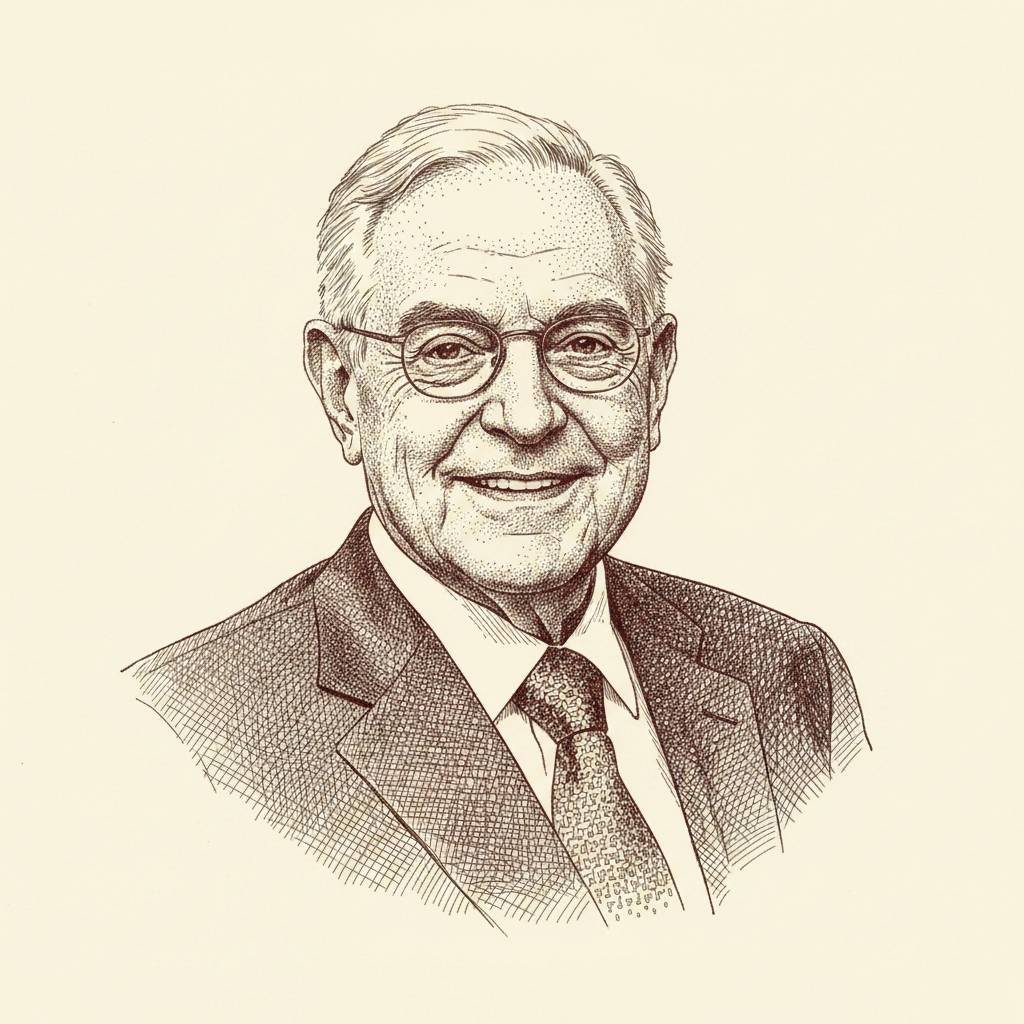
Who he is

George Soros, born in Hungary in 1930, built the Quantum Fund into one of the most successful investment vehicles ever, compounding capital at exceptional rates over decades through global macro trading.
He is most famous for 1992, when he shorted the British pound so aggressively that he is credited with "breaking the Bank of England," reportedly earning over a billion dollars in a single trade.
Core philosophy
Soros developed the theory of reflexivity: markets do not merely reflect fundamentals — perceptions and prices influence the fundamentals themselves, creating self-reinforcing booms and busts. He hunts for the moments where this feedback loop creates large, mispriced moves.
Unlike bottom-up value investors, Soros works top-down from macro themes — currencies, rates, and policy — but the underlying discipline is the same: identify a gap between perception and reality, then size into it with conviction and rigorous risk control.
Key lessons for individual investors
- Markets are driven by perception as much as fundamentals — sentiment can become self-fulfilling.
- The biggest opportunities sit where consensus is most wrong, not where it is comfortable.
- Risk management is paramount: Soros cut losing positions ruthlessly and fast.
- Conviction and size matter — a great idea sized too small barely moves the needle.
- Being right is not enough; timing and survival turn an insight into a result.
Live track record & latest portfolio
Real figures from public 13F filings and historical returns, via Soros Fund Management LLC. For education only — not investment advice, and not a recommendation to copy any position.
Source: GuruFocus. Figures are delayed and may be revised.
Ask George Soros a question
Type a question about George Soros's classic investment theories, or pick one below.

Half a billion dollars a week, into the panic
Sensing late-cycle excess in 2007, Howard Marks and Bruce Karsh raised a record ~$10.9 billion distressed-debt reserve fund at Oaktree — and then made investors wait while they deployed almost none of it. The memos kept repeating one idea: you cannot predict, but you can prepare.
In the fifteen weeks after Lehman fell, Oaktree invested roughly $500 million per week into the senior debt of fundamentally sound companies at desperate prices, while clients called asking if they had lost their minds. The fund became one of the most successful in distressed-investing history.
The riskiest moment is when everything feels safe; the safest is when everything feels hopeless. Position by the cycle, act when others cannot.

The courage to do nothing
At the top of the speculative "Go-Go" years, Buffett — after thirteen years compounding near 30% with no down year — wrote to his partners that he no longer understood the market and could find nothing sensible to buy. Rather than lower his standards, he closed the partnership and handed back the money at the peak of his fame.
Then he waited. When the 1973–74 crash finally arrived, he was liquid while everyone else was forced to sell, and described feeling "like an oversexed man in a harem" — buying the Washington Post and other franchises at panic prices that set up the next thirty years.
Cash and patience are positions too. Standards only count if you keep them when it is hardest.

When the price already assumed a miracle
In 1972, institutions convinced themselves that about fifty "one-decision" growth stocks could be bought at any price and never sold. Polaroid traded above 90 times earnings, McDonald's and Disney near 80, Avon around 65. Run the arithmetic backwards and those prices quietly assumed decades of flawless, ever-accelerating growth.
The 1973–74 bear market repriced the dream: the group fell 60–90%, and Polaroid eventually went bankrupt. The cruel detail is that many of the businesses kept growing exactly as promised — the investments still failed, because the starting price had already spent the future.
Run the DCF backwards: ask what growth today's price assumes, then ask honestly whether reality can deliver it.
Related tools
Frequently asked questions
What is the Quantum Fund?
The hedge fund George Soros co-founded, famous for global macro investing and one of the strongest long-run records in the industry.
What is reflexivity?
Soros's theory that market prices and participant perceptions influence each other, so beliefs can shape fundamentals and drive self-reinforcing booms and busts.
Pressure-test macro-aware, contrarian ideas:
Download Valuefocus