
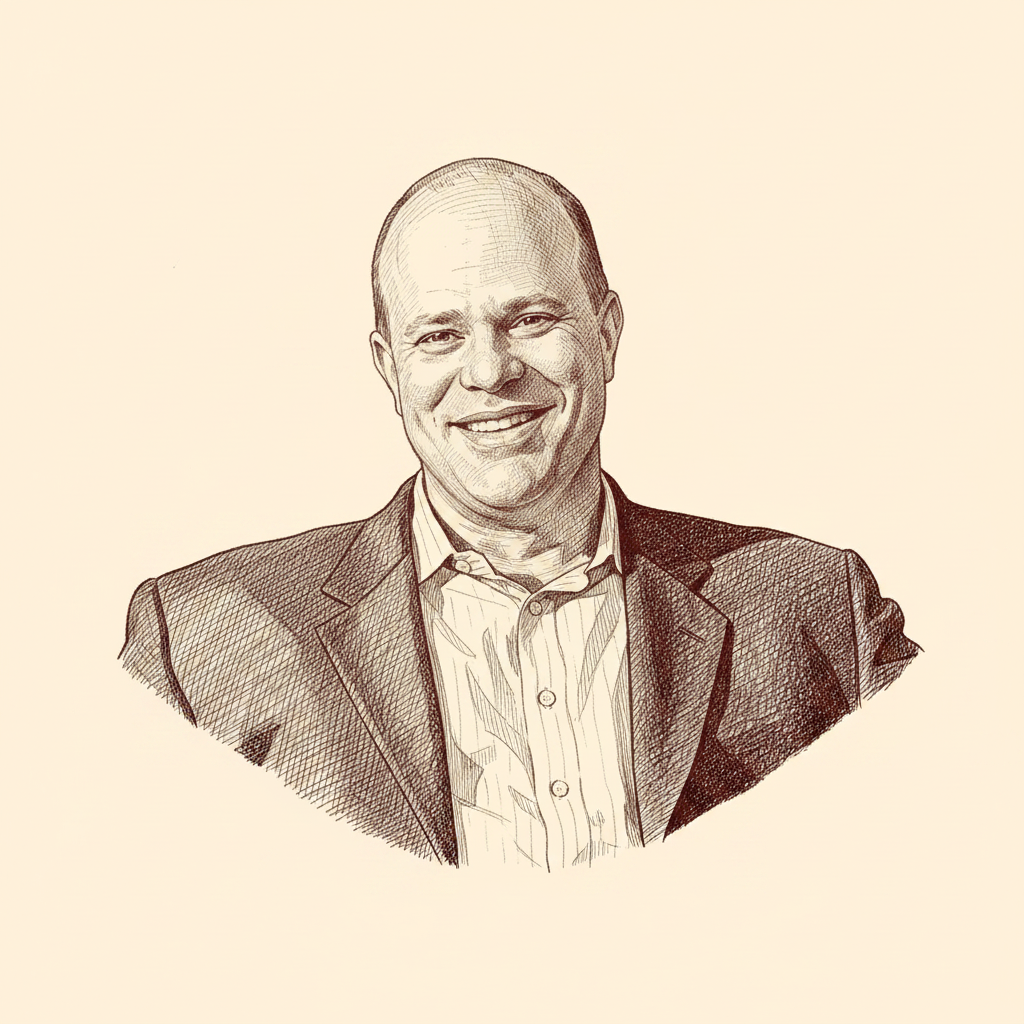
David Tepper
Founder of Appaloosa Management — a distressed-debt specialist famous for buying aggressively into fear and one of the best long-run hedge fund records on record.
Who he is

David Tepper founded Appaloosa Management in 1993 after a career trading high-yield and distressed debt at Goldman Sachs. He built one of the most successful hedge fund records of his generation by specializing in the bonds and equities of troubled companies.
He is best known for his enormous 2009 bet on beaten-down bank securities during the financial crisis, a contrarian call that returned billions as markets recovered.
Core philosophy
Tepper buys when others are forced to sell. His edge is analyzing distressed capital structures — figuring out which troubled companies will survive and where the asymmetric payoff sits — then sizing aggressively when the odds are in his favor.
He pairs deep credit analysis with a willingness to act decisively on macro turning points. The discipline underneath is value investing: paying far less than what an asset is worth once panic clears.
Key lessons for individual investors
- The best prices appear when others are forced to sell — fear creates the bargain.
- Understand the full capital structure: debt, equity and who gets paid first matter in a crisis.
- Asymmetric bets — limited downside, large upside — are worth concentrating into.
- Conviction must be paired with survival; size so a wrong call does not end the game.
- Macro turning points reward those prepared to act when the news is darkest.
Live track record & latest portfolio
Real figures from public 13F filings and historical returns, via Appaloosa LP. For education only — not investment advice, and not a recommendation to copy any position.
Annual return history
Yearly returns (%) as reported by GuruFocus. Past performance does not predict future results.
Source: GuruFocus. Figures are delayed and may be revised.
Ask David Tepper a question
Type a question about David Tepper's classic investment theories, or pick one below.

The buyer of last resort
Through the mid-2000s Baupost was mocked for sitting on enormous cash reserves — at times 40–50% of the fund — while markets melted upward. Klarman's answer never changed: cash is not idleness, it is an option on other people's future panic.
When Lehman collapsed in late 2008 and forced sellers flooded every market, Baupost was one of the few buyers with both liquidity and a pre-researched wish list. Klarman deployed billions into bonds and distressed claims at prices that assumed the world was ending. It was the fund's finest stretch — earned years earlier, when holding cash looked foolish.
Risk management is not a brake on returns. Done early, it is the source of them.
Half a billion dollars a week, into the panic
Sensing late-cycle excess in 2007, Howard Marks and Bruce Karsh raised a record ~$10.9 billion distressed-debt reserve fund at Oaktree — and then made investors wait while they deployed almost none of it. The memos kept repeating one idea: you cannot predict, but you can prepare.
In the fifteen weeks after Lehman fell, Oaktree invested roughly $500 million per week into the senior debt of fundamentally sound companies at desperate prices, while clients called asking if they had lost their minds. The fund became one of the most successful in distressed-investing history.
The riskiest moment is when everything feels safe; the safest is when everything feels hopeless. Position by the cycle, act when others cannot.

Buying a great franchise on its worst day
By 1976 GEICO had under-priced policies and under-reserved for losses; the insurer was sliding toward insolvency and the stock had collapsed from $61 to about $2. Most investors saw a corpse. Buffett saw that the core advantage — selling insurance direct, at the lowest cost in the industry — was completely intact; the wound was bad management, and management can be replaced.
Berkshire invested roughly $45 million between 1976 and 1980 while a new CEO repaired pricing and reserves. The company recovered, compounded for two decades, and in 1995 Buffett paid $2.3 billion to buy the half of GEICO that Berkshire did not already own.
Ask first whether the problem kills the moat or just the quarter. A fixable wound at a panic price is where safety and return meet.
Related tools
Frequently asked questions
What is Appaloosa Management?
David Tepper's hedge fund, founded in 1993, known for distressed-debt investing and one of the strongest long-run track records in the industry.
Is David Tepper a value investor?
In substance, yes — he buys distressed assets far below their recovery value, though his style leans on credit analysis and bold, contrarian timing.
Pressure-test contrarian, crisis-era ideas:
Download Valuefocus