
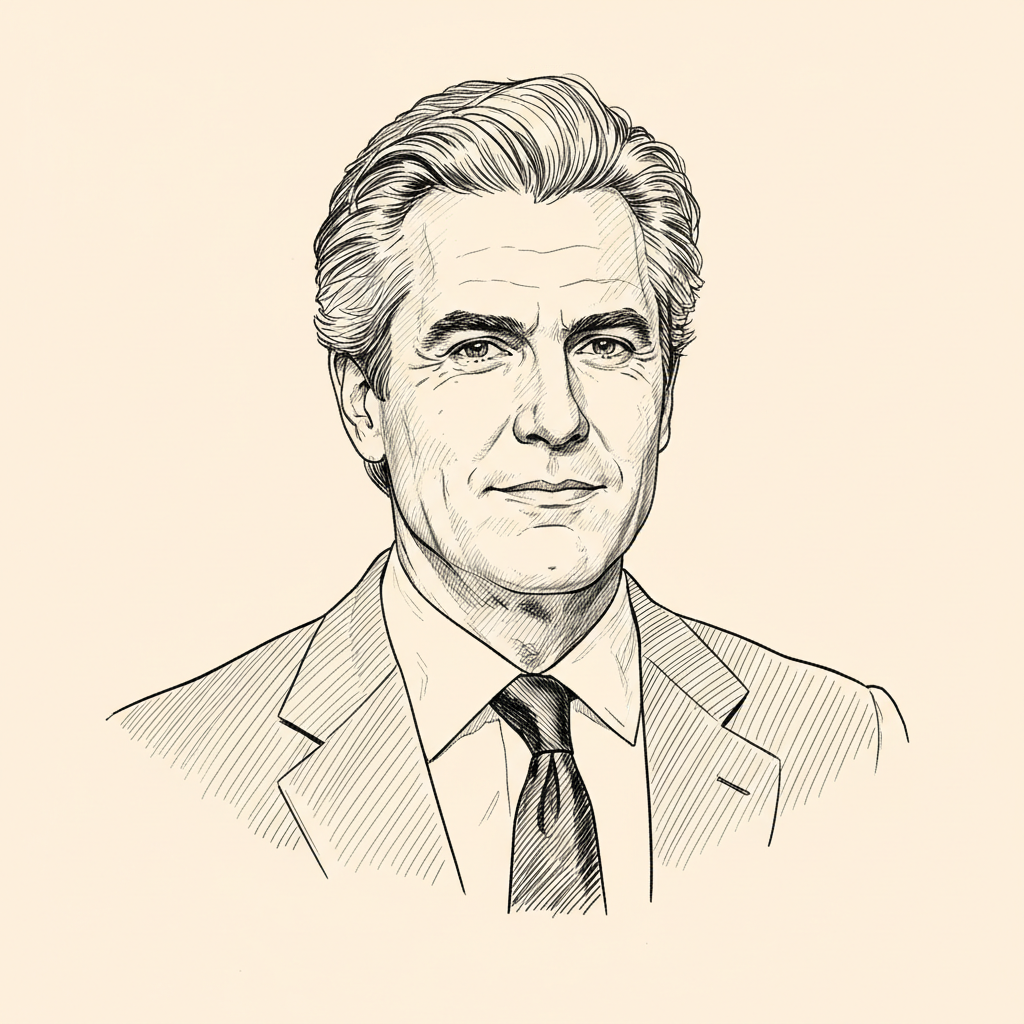
Bill Ackman
Founder of Pershing Square Capital — one of the most public activist investors, known for concentrated bets on simple, predictable, high-quality businesses.
Who he is

Bill Ackman founded Pershing Square Capital Management in 2004 and built it into one of the best-known activist hedge funds. He runs a highly concentrated book — often fewer than a dozen positions — and is unusually transparent, presenting his theses publicly through detailed slide decks and interviews.
His record swings between spectacular wins (a celebrated 2020 market crash hedge) and painful losses (Valeant, Herbalife), making him one of investing's most studied — and debated — figures.
Core philosophy
Ackman targets simple, predictable, free-cash-flow-generative businesses with durable competitive advantages — companies he can understand and hold for years. He concentrates capital into his highest-conviction ideas rather than diversifying broadly.
When he sees a gap between price and intrinsic value that management can close, he becomes an activist: taking a large stake and pushing for operational or capital-allocation changes. The underlying engine, though, is classic quality-at-a-reasonable-price value investing.
Key lessons for individual investors
- Concentration can compound faster — but only if your research is deep enough to justify the conviction.
- Quality and predictability matter more than cheapness alone; a wonderful business held for years beats a cigar butt.
- Being public about a thesis invites scrutiny that sharpens (or exposes) your reasoning.
- Even great investors take large losses; position sizing and survival matter as much as being right.
- Patience is an edge: his biggest wins came from holding through years of volatility.
Live track record & latest portfolio
Real figures from public 13F filings and historical returns, via Pershing Square Capital Management, L.P.. For education only — not investment advice, and not a recommendation to copy any position.
Annual return history
Yearly returns (%) as reported by GuruFocus. Past performance does not predict future results.
Source: GuruFocus. Figures are delayed and may be revised.
Ask Bill Ackman a question
Type a question about Bill Ackman's classic investment theories, or pick one below.

Margin of safety is something you verify yourself
In late 1963 the Allied Crude Vegetable Oil scandal exploded: storage tanks pledged as collateral turned out to hold mostly seawater topped with a thin layer of salad oil. American Express, which had guaranteed the warehouse receipts, faced an enormous liability, and its stock was nearly cut in half. The headlines screamed bankruptcy.
Buffett did not read more headlines — he went out to restaurants and banks in Omaha and watched. People were still paying with American Express cards; travelers cheques were still being accepted everywhere. The franchise was intact. He put roughly 40% of his partnership into the stock, and within five years it had risen about five-fold.
A margin of safety comes from facts you check with your own eyes — not from the absence of scary news.

You don't need a scale to know a man is fat
In the brutal 1973–74 bear market, the entire Washington Post Company — the newspaper, Newsweek magazine and several TV stations — traded for around $100 million. Buffett conservatively reckoned the assets were worth at least $400 million. No precise model was needed: the gap between price and value was visible from across the street.
He invested about $10.6 million, then watched the stock fall further and did nothing but wait. Decades later the position was worth more than $1 billion, plus a stream of dividends along the way — a return of roughly one hundred times. As Buffett put it: you don't need to know a man's exact weight to know that he's fat.
The point of comparing price with value is to spot obvious gaps — not to manufacture false precision.

A quality compounder hiding in plain sight
In 2016, with Apple trading near 10–12 times earnings amid fears the iPhone cycle had peaked, Berkshire began buying — eventually about $36 billion of stock. Buffett's thesis required no technology forecast: a product customers would not abandon, extraordinary returns on invested capital, and a buyback machine that increased Berkshire's ownership share every year without another dollar spent.
The stake grew to be worth more than $150 billion at its peak — the most profitable single investment in Berkshire's history, earned not by predicting gadgets but by recognizing a high-ROIC franchise priced like a metal-bender.
High returns on capital plus a shrinking share count quietly multiply your slice of the profits.
Related tools
Frequently asked questions
What is Pershing Square?
Bill Ackman's investment firm, founded in 2004, known for running a concentrated portfolio of high-quality businesses and for activist campaigns.
Is Ackman a value investor?
At his core, yes — he buys quality businesses below his estimate of intrinsic value, though his activist style and concentration make his approach distinctive.
Pressure-test concentrated, high-conviction ideas:
Download Valuefocus