
Ron Baron
Founder of Baron Funds — a growth investor famous for holding extraordinary businesses for a decade or more and for backing exceptional founders.
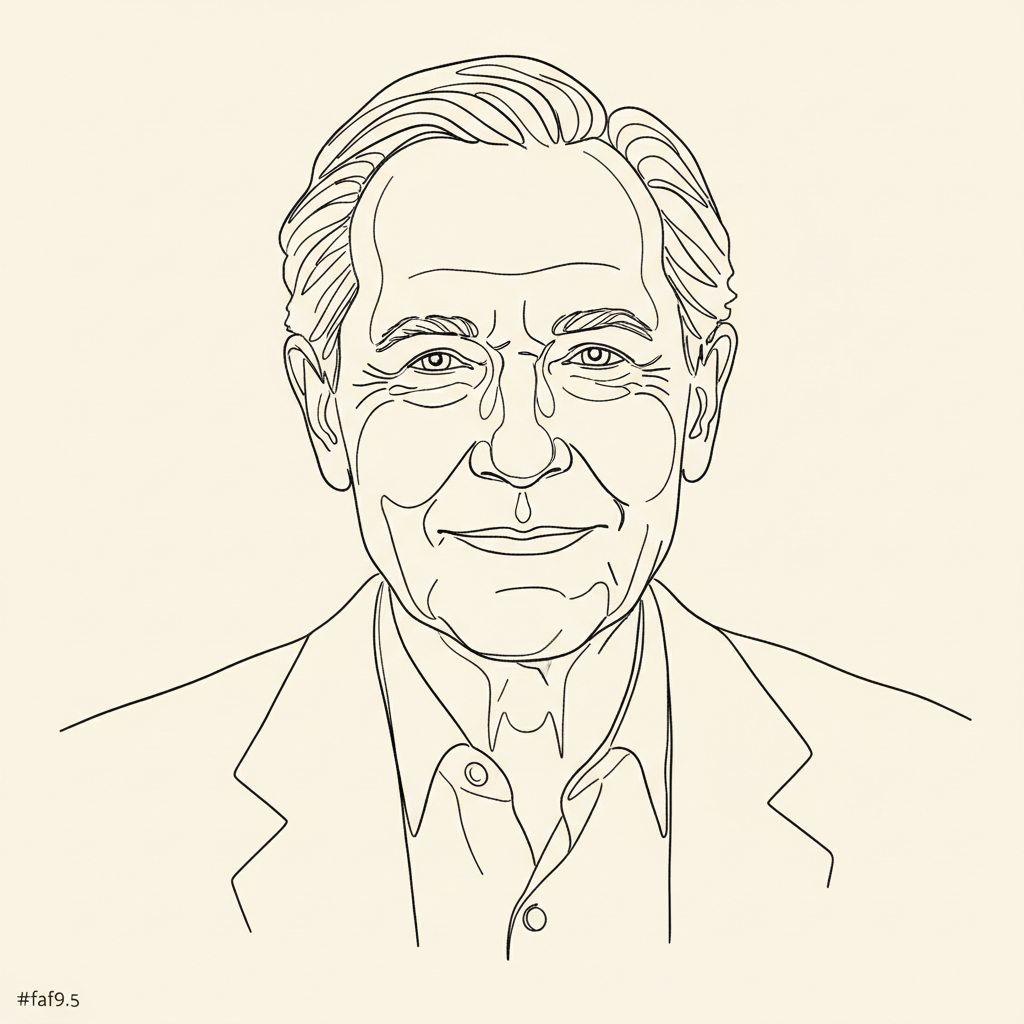
Who he is

Ron Baron founded Baron Capital in 1982 and built a family of growth-focused mutual funds. He is known for an unusually long holding period — often a decade or more — and for very public, high-conviction bets on founder-led businesses.
His philosophy is simple to state and hard to practice: find exceptional businesses with great management, buy them, and hold them long enough for compounding to do its work.
Core philosophy
Baron invests in companies he believes can double in size every four to five years, focusing on durable competitive advantages, large addressable markets, and — above all — outstanding management he trusts to allocate capital well.
He treats volatility as the price of admission rather than a reason to sell. His view: you make money by being right about a great business and then sitting still through the inevitable drawdowns, not by trading in and out.
Key lessons for individual investors
- Time in the market, not timing the market — compounding rewards holding power.
- Management quality is a core part of the thesis, not a footnote.
- A great business can survive a falling price; conviction is what lets you hold through it.
- Big addressable markets give winners room to grow for years.
- You only need a few enormous winners to make a career — let them run.
Live track record & latest portfolio
Real figures from public 13F filings and historical returns, via Baron Funds. For education only — not investment advice, and not a recommendation to copy any position.
Annual return history
Yearly returns (%) as reported by GuruFocus. Past performance does not predict future results.
Source: GuruFocus. Figures are delayed and may be revised.
Ask Ron Baron a question
Type a question about Ron Baron's classic investment theories, or pick one below.
A quality compounder hiding in plain sight
In 2016, with Apple trading near 10–12 times earnings amid fears the iPhone cycle had peaked, Berkshire began buying — eventually about $36 billion of stock. Buffett's thesis required no technology forecast: a product customers would not abandon, extraordinary returns on invested capital, and a buyback machine that increased Berkshire's ownership share every year without another dollar spent.
The stake grew to be worth more than $150 billion at its peak — the most profitable single investment in Berkshire's history, earned not by predicting gadgets but by recognizing a high-ROIC franchise priced like a metal-bender.
High returns on capital plus a shrinking share count quietly multiply your slice of the profits.
The $25 million lesson that changed Buffett
In 1972 the sellers of See's Candies asked $30 million; Buffett, trained on Graham's cigar butts, refused to go above $25 million — roughly three times book value, a price the old Buffett would never pay. The deal nearly died over $5 million. Charlie Munger pushed back: a beloved brand with loyal customers and genuine pricing power deserved a premium.
They paid the $25 million. See's went on to ship more than $1.65 billion of cumulative pre-tax earnings back to Omaha while needing almost no additional capital — raising prices every year without losing a single loyal customer. Buffett later called it 'the prototype of a dream business' and credits this one purchase with rewiring how he invests.
Quality compounds quietly for decades. Temperament and a clear circle of competence beat chasing the cheapest price.

A fair price for a wonderful business
In 1988, just months after the Black Monday crash, Warren Buffett quietly began buying Coca-Cola shares. By 1989 Berkshire had spent roughly $1 billion — at about 15 times earnings, hardly a statistical bargain. Wall Street was puzzled: the "cigar-butt" student of Graham was paying up for a household brand.
Buffett was not valuing the next quarter. He was estimating decades of predictable owner earnings from a product sold in nearly every country on earth, protected by the strongest brand moat in consumer goods. Ten years later the stake was worth more than $13 billion, and Berkshire still holds it today — the annual dividends alone now return a large share of the original cost every single year.
A valuation model exists to estimate long-term cash generation — not to find the statistically cheapest ticker on the screen.
Related tools
Frequently asked questions
What is Baron's typical holding period?
Unusually long — often a decade or more. Baron is known for buying growth businesses and holding through volatility to let compounding work.
Is Ron Baron a value or growth investor?
A growth investor at heart, but one who insists on paying a sensible price for durable quality and exceptional management.
Build conviction strong enough to hold for years:
Download Valuefocus