
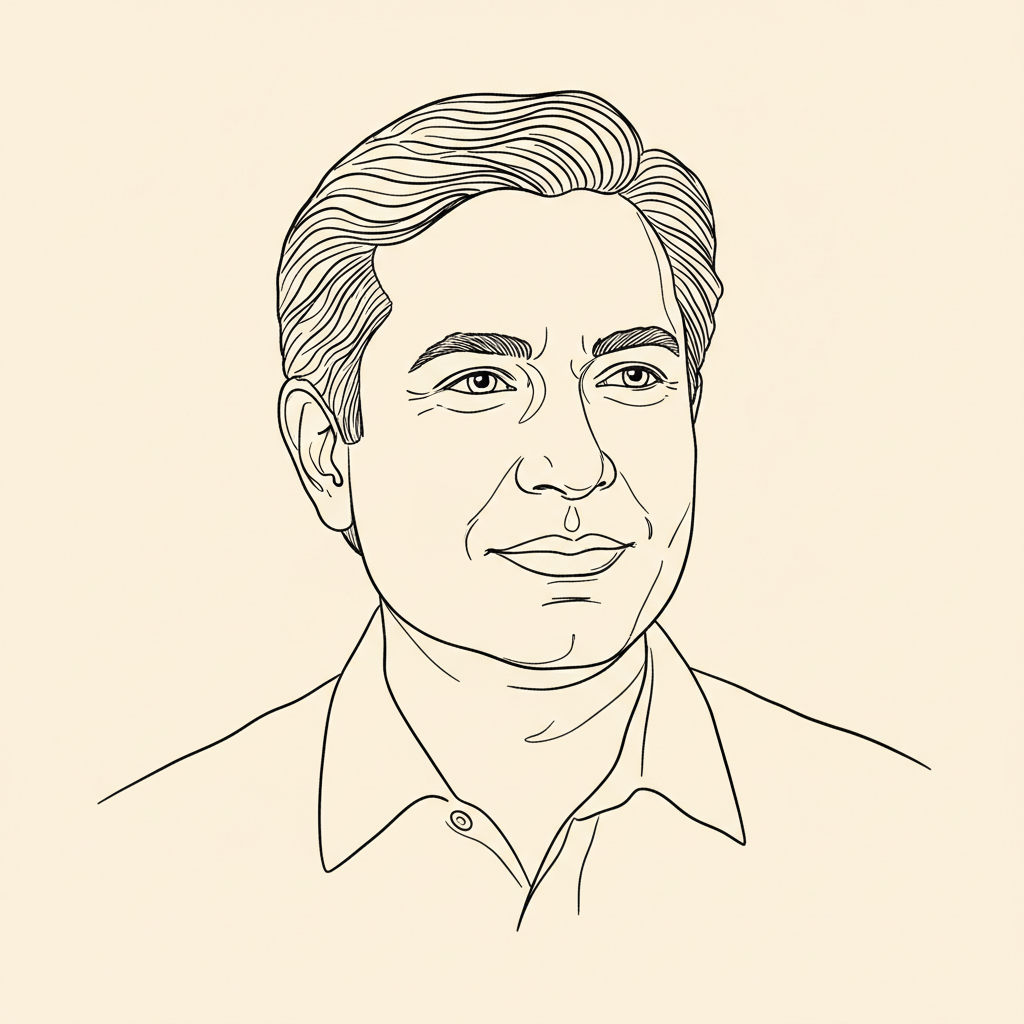
Mohnish Pabrai
Founder of Pabrai Funds and author of "The Dhandho Investor" — a concentrated value investor who openly clones Buffett and Munger and hunts for low-risk, high-uncertainty bets.
Who he is

Mohnish Pabrai is an Indian-American investor who sold his IT company and launched Pabrai Investment Funds in 1999, modeling it directly on the early Buffett partnerships.
He is widely known for the book "The Dhandho Investor," for his openness about "cloning" great investors, and for once bidding over $650,000 with Guy Spier for a charity lunch with Warren Buffett.
Core philosophy
Pabrai's signature idea is "heads I win, tails I don't lose much" — concentrated bets where the downside is limited and the upside is large. He calls this Dhandho: low-risk, high-uncertainty situations the market misprices.
He champions cloning: rather than seeking originality, copy the proven methods and even the holdings of the best investors. He runs a focused portfolio, holds patiently, and keeps fees and activity low.
Key lessons for individual investors
- Hunt for asymmetry: limited downside, large upside.
- Cloning beats originality — copy proven methods shamelessly.
- Concentrate in your best ideas rather than over-diversifying.
- Low risk and high uncertainty is not the same as high risk.
- Patience and inactivity are features, not bugs, of good investing.
Live track record & latest portfolio
Real figures from public 13F filings and historical returns, via Dalal Street, LLC. For education only — not investment advice, and not a recommendation to copy any position.
Source: GuruFocus. Figures are delayed and may be revised.
Ask Mohnish Pabrai a question
Type a question about Mohnish Pabrai's classic investment theories, or pick one below.

Margin of safety is something you verify yourself
In late 1963 the Allied Crude Vegetable Oil scandal exploded: storage tanks pledged as collateral turned out to hold mostly seawater topped with a thin layer of salad oil. American Express, which had guaranteed the warehouse receipts, faced an enormous liability, and its stock was nearly cut in half. The headlines screamed bankruptcy.
Buffett did not read more headlines — he went out to restaurants and banks in Omaha and watched. People were still paying with American Express cards; travelers cheques were still being accepted everywhere. The franchise was intact. He put roughly 40% of his partnership into the stock, and within five years it had risen about five-fold.
A margin of safety comes from facts you check with your own eyes — not from the absence of scary news.

A valuation done with an annual report and a weekend
Buffett read PetroChina's annual report at home and pegged the company's value at roughly $100 billion. The market was pricing it near $37 billion. He built no spreadsheet, met no management, sought no second opinion — the gap was too wide to need precision. Berkshire bought about $488 million of the Hong Kong-listed shares.
By 2007, rising oil prices and a re-rating had carried PetroChina's market value past $250 billion. Buffett sold the entire stake for about $4 billion — roughly an eight-fold return plus dividends — and moved on.
When value is triple the price, ordinary accuracy is enough. The best decisions rarely require the most elaborate models.

Buying a great franchise on its worst day
By 1976 GEICO had under-priced policies and under-reserved for losses; the insurer was sliding toward insolvency and the stock had collapsed from $61 to about $2. Most investors saw a corpse. Buffett saw that the core advantage — selling insurance direct, at the lowest cost in the industry — was completely intact; the wound was bad management, and management can be replaced.
Berkshire invested roughly $45 million between 1976 and 1980 while a new CEO repaired pricing and reserves. The company recovered, compounded for two decades, and in 1995 Buffett paid $2.3 billion to buy the half of GEICO that Berkshire did not already own.
Ask first whether the problem kills the moat or just the quarter. A fixable wound at a panic price is where safety and return meet.
Related tools
Frequently asked questions
What is the Dhandho framework?
Mohnish Pabrai's approach of making concentrated, low-risk, high-uncertainty bets where the downside is limited and the upside is large — "heads I win, tails I don't lose much."
What does Pabrai mean by "cloning"?
Deliberately copying the proven methods and even the holdings of great investors like Buffett and Munger, rather than trying to be original.
Pressure-test concentrated, asymmetric ideas:
Download Valuefocus