
Concentration vs Diversification: Do Focused Funds Win?
Every value investor we track, plotted by how concentrated their portfolio is against their 10-year return — see whether holding fewer stocks actually pays off.
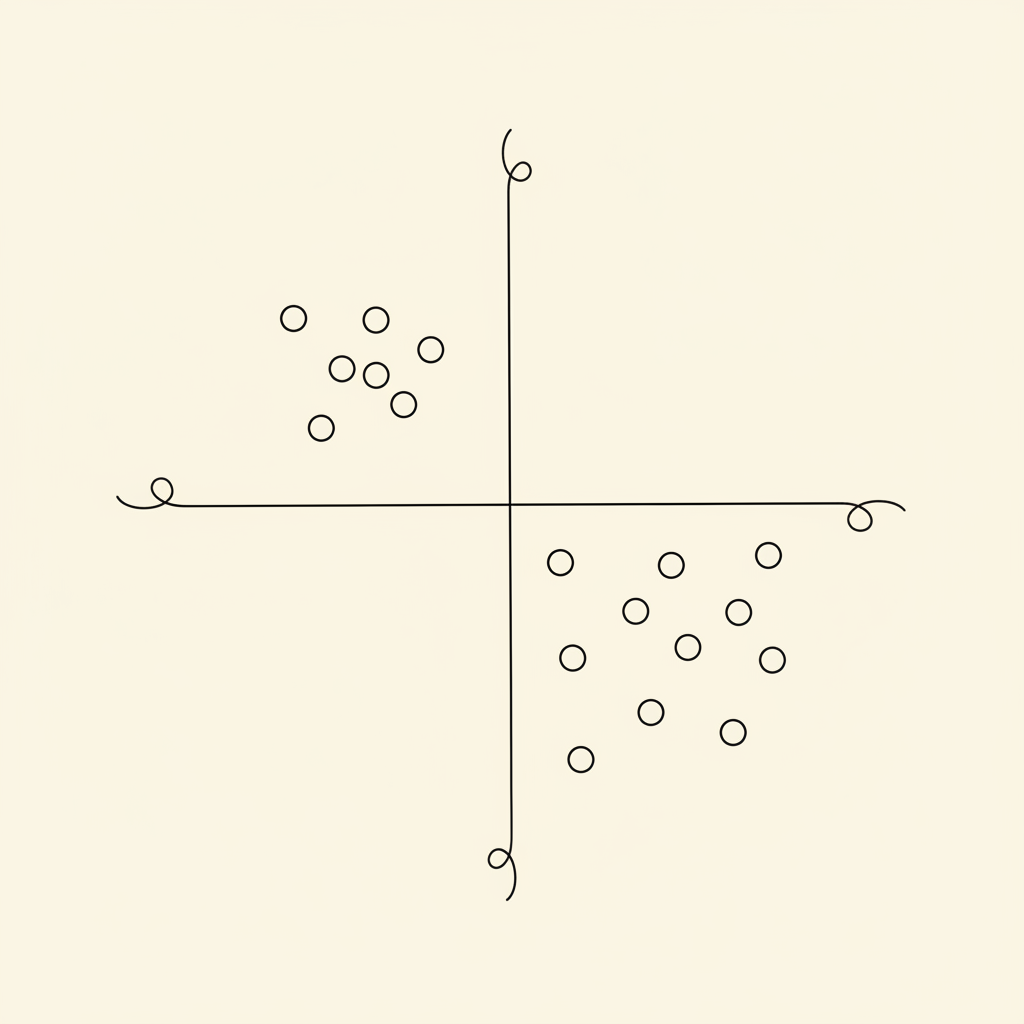
Do concentrated portfolios beat diversified ones?
Across the value investors we track, there is no clean rule that fewer holdings means higher returns — the strongest long-term records cluster among focused managers (often 15–40 stocks), but plenty of concentrated funds also lag. Concentration raises the range of outcomes in both directions: it lets conviction pay off, and it lets mistakes hurt more.
- The top-left quadrant — concentrated and high-returning — is where conviction-driven value investing aims to live.
- Highly diversified funds (hundreds of holdings) tend to track the index more closely, for better or worse.
- Concentration is a risk choice, not a guarantee — it widens outcomes rather than improving them on average.
One of the oldest debates in value investing is whether to concentrate in a handful of best ideas or diversify across many. This map plots every manager we track on two axes: how many stocks they hold, and what they have returned over ten years.
Each dot is one investor. The horizontal axis is the number of disclosed holdings (on a log scale, so a 10-stock fund and a 1,000-stock fund both fit). The vertical axis is their reported 10-year annualized return. Hover or tap any dot to see who it is.
Source: GuruFocus 13F filings and historical returns. Figures are delayed and self-reported.
The $25 million lesson that changed Buffett
In 1972 the sellers of See's Candies asked $30 million; Buffett, trained on Graham's cigar butts, refused to go above $25 million — roughly three times book value, a price the old Buffett would never pay. The deal nearly died over $5 million. Charlie Munger pushed back: a beloved brand with loyal customers and genuine pricing power deserved a premium.
They paid the $25 million. See's went on to ship more than $1.65 billion of cumulative pre-tax earnings back to Omaha while needing almost no additional capital — raising prices every year without losing a single loyal customer. Buffett later called it 'the prototype of a dream business' and credits this one purchase with rewiring how he invests.
Quality compounds quietly for decades. Temperament and a clear circle of competence beat chasing the cheapest price.

The only deal Munger ever pushed
In the depths of the 2008 crisis, Munger did something he had never done before: he actively lobbied Buffett to invest in BYD, a Chinese battery and car maker led by engineer Wang Chuanfu — a man Munger described as "a combination of Thomas Edison and Jack Welch". The conviction came through Li Lu, whose circle of competence covered what Omaha's did not.
Berkshire paid $232 million for about 10% of the company — a tiny position by its standards, in an industry Buffett had publicly sworn off. At its 2022 peak the stake was worth roughly $9 billion, close to a forty-fold gain, before Berkshire began trimming.
A circle of competence can be extended honestly — by trusting someone who genuinely has one where you do not.
Related tools
Frequently asked questions
Why is the horizontal axis on a log scale?
Holdings range from under 10 to over 1,000. A log scale keeps both tiny, concentrated funds and sprawling, diversified ones readable on the same chart instead of squashing the focused managers into one corner.
Does the map prove concentration is better?
No. It shows that several of the best long-term records belong to focused managers, but it also shows concentrated funds that lagged. Concentration widens the range of outcomes — it is a risk decision, not a free lunch.
Where does the data come from?
Holdings counts and 10-year returns come from GuruFocus, based on each manager’s latest 13F filing. The data is delayed and self-reported.
Learn how focused value investors size their best ideas — inside Valuefocus.
Download Valuefocus